Bluetooth Food Thermometer Guide for Commercial Kitchens
Compare the best Bluetooth food thermometers for restaurant use. Features, accuracy specs, FDA compliance, and how wireless thermometers fit into your logging workflow.
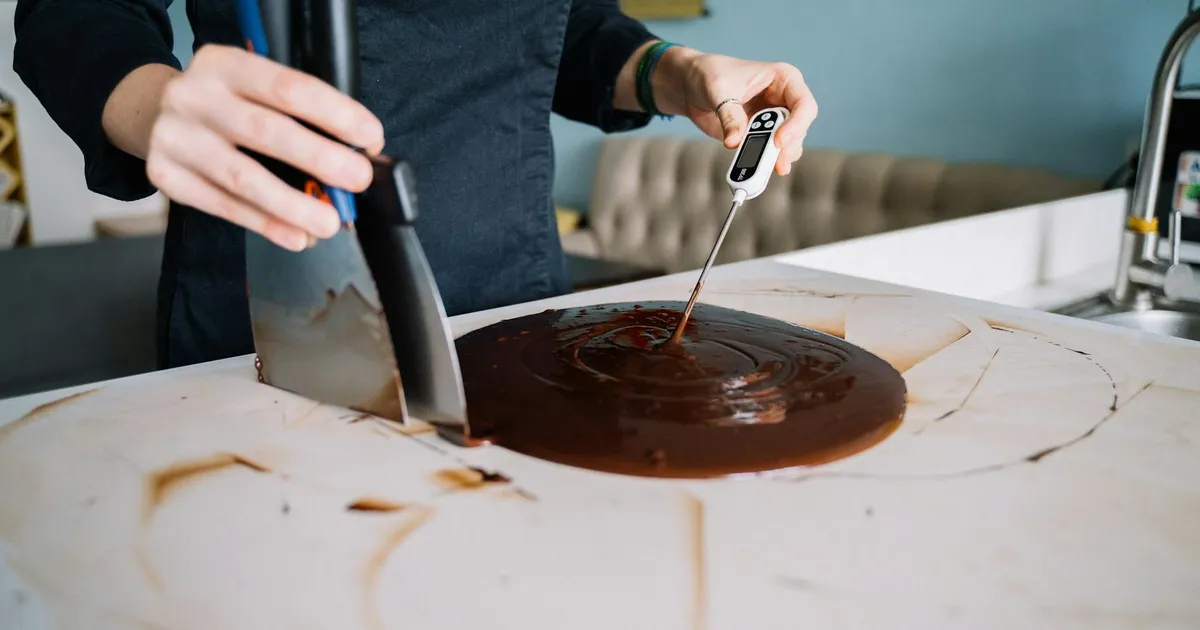
Photo by KitchenTemp via Pexels
Why Thermometer Technology Matters for Compliance
In food safety, accuracy and speed are not nice-to-have features — they are compliance requirements. FDA 2022 Food Code Section 4-302.12 requires that food temperature measuring devices be accurate to ±2°F in the intended range of use. A thermometer that reads 3°F low could mask a genuine food safety violation.
Bluetooth and wireless thermometers have transformed commercial kitchen operations by enabling faster readings, better logging integration, and reduced human error in transcription. But they are not all equal, and not all are appropriate for compliance use. This guide helps you choose the right thermometer and use it correctly.
Types of Thermometers Used in Commercial Kitchens
Instant-Read Probe Thermometers
The workhorse of kitchen temperature checks. Insert the probe into food and read in 2-5 seconds. Essential for:
- Verifying cooking temperatures at completion
- Spot-checking cold-holding food
- Calibration verification
Accuracy requirement: ±2°F per FDA 2022 Food Code 4-302.12 Required for: Every commercial food service operation
Leave-In Probe Thermometers
Probes inserted into food and left in place during cooking or cooling. Useful for roasting operations, cooling monitoring.
Limitation: Single-point measurement. Not a substitute for an instant-read check at multiple locations for large cuts.
Bluetooth/Wireless Probe Thermometers
Bluetooth thermometers pair with a smartphone or tablet app to log readings automatically. Key advantages for commercial use:
- Automatic data capture eliminates manual transcription errors
- Integration with logging software creates an instant timestamped record
- Multi-probe models can monitor several items simultaneously
- Alerts when readings go out of range
Continuous Temperature Monitoring Sensors
IoT sensors (covered separately in the IoT monitoring article) provide continuous ambient temperature logging for storage units. These are not probe thermometers — they measure air temperature and do not replace food probing for cooking verification.
Key Specifications for Commercial Use
When evaluating a Bluetooth food thermometer for compliance use, check these specifications:
| Specification | Minimum for Compliance Use | Why It Matters | |---------------|---------------------------|----------------| | Accuracy | ±2°F or better | FDA 2022 Food Code requirement | | Range | -40°F to 300°F (-40°C to 149°C) | Covers all food safety measurements | | Response time | ≤5 seconds | Practical for high-volume service | | Probe material | Food-grade stainless steel | Required for food contact | | IP rating | IP65 or higher | Survives commercial kitchen moisture | | Battery life | ≥12 hours continuous | Covers full service without recharging | | Calibration offset | Adjustable | Required for ongoing accuracy maintenance |
Calibration Requirements
FDA 2022 Food Code requires that probe thermometers be calibrated or verified for accuracy regularly. Two standard calibration methods:
Ice-Point Method (Cold Calibration)
- Fill a glass with crushed ice and cold water
- Let stabilize for 3 minutes
- Insert probe into center of the ice water (not touching ice or glass)
- Read should be 32°F (0°C) ± 2°F
- If off by more than 2°F, use the calibration offset function to adjust
Frequency: Weekly minimum, daily in high-use operations
Boiling-Point Method (Hot Calibration)
- Bring water to a full boil
- Insert probe into boiling water (not touching pot)
- At sea level, should read 212°F (100°C) ± 2°F
- Adjust for elevation: subtract approximately 1°F per 550 feet above sea level
When to use: For thermometers used primarily in high-temperature ranges (cooking verification)
Documentation: Log every calibration check. Date, method, result, adjustment made (if any), staff member. This record is reviewed by health inspectors and is required under FDA 2022 Food Code.
Using a Bluetooth Thermometer Correctly
Having the right thermometer is only half the equation. Technique matters for accurate readings.
Probe Insertion Technique
- Thin foods (burgers, fish fillets, chicken breasts): Insert probe horizontally through the side of the food to reach the geometric center
- Large cuts (roasts, whole poultry): Insert to the deepest part of the thickest section, avoiding bone
- Patties and thin items: Insert from the side to reach the center
- Casseroles and hot-held items: Insert to the center of the deepest portion
- Multiple probing locations: For large cuts and for cooking line QC, probe 3-5 locations
Sanitizing Between Uses
Every probe must be sanitized between food items to prevent cross-contamination. The FDA 2022 Food Code is explicit: thermometer probes are food-contact surfaces and must be cleaned and sanitized when used on different food items.
Sanitizing procedure:
- Wipe probe clean with a paper towel
- Swab with a sanitizer wipe (70% isopropyl alcohol swabs work well for thermometer probes)
- Allow to air-dry before next use (10-15 seconds)
- Do not wipe with a cloth that has been used on food surfaces
Most Bluetooth probe thermometers with IP65+ ratings can also be run under warm water between uses.

Integrating Bluetooth Thermometers into Your Logging Workflow
The primary advantage of Bluetooth thermometers for commercial kitchens is the integration potential. When a reading is automatically captured and associated with a timestamp, a food item, and a staff member, you have the foundation of a complete compliance log without manual transcription.
Effective Workflow
- Staff scans or selects the food item in the logging app
- Inserts Bluetooth probe into food
- Reading is captured automatically when stable
- Staff confirms the entry and adds any corrective action notes
- Record is saved with timestamp, staff ID, food item, and temperature
This workflow takes 15-20 seconds per reading and eliminates the most common documentation errors: wrong time, wrong temperature, wrong item, or missed entries.
What to Look for in App Integration
- Configurable alert thresholds per food item
- Automatic corrective action prompts for out-of-range readings
- Export to PDF or CSV for inspection reports
- Cloud sync so records are not lost if a device is damaged
- Multi-user support so any staff member can log from any device
Recommended Probe Care and Replacement
Probe thermometers are precision instruments that degrade with heavy commercial use:
| Care Practice | Frequency | |---------------|-----------| | Sanitize between food items | Every use | | Clean with warm soapy water | After each shift | | Verify calibration | Weekly | | Inspect probe tip for damage | Monthly | | Replace probe if bent or damaged | Immediately | | Replace battery | Per battery indicator / monthly |
A bent or damaged probe tip affects accuracy. Replace immediately — do not continue using a compromised thermometer and relying on its readings for compliance purposes.
How KitchenTemp Helps
KitchenTemp integrates with Bluetooth probe thermometers to capture readings automatically, log them with timestamps and staff attribution, and alert you to out-of-range findings in real time. Every probe reading becomes a permanent compliance record — no manual transcription, no gaps, no end-of-shift guessing.
If you are using a probe thermometer and writing readings in a paper log, you are one step away from having all of that work disappear. Start your free trial at KitchenTemp and connect your thermometers to a permanent, inspection-ready system.