Buffet Temperature Management: Keeping Food Safe During Extended Service
Buffets must hold hot food at 135°F and cold at 41°F throughout service. This guide covers setup, monitoring intervals, time limits, and corrective actions.
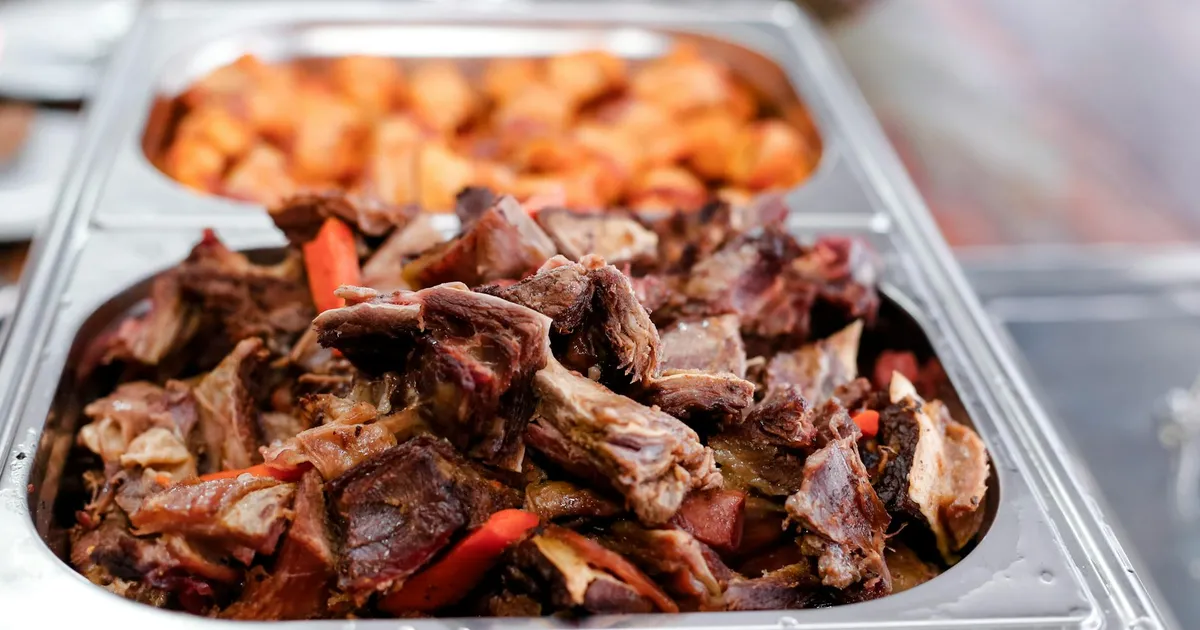
Photo by KitchenTemp via Pexels
Why Buffets Are High-Risk Food Safety Environments
Buffets and self-service food stations represent one of the highest-risk environments in food service for temperature-related compliance failures. Multiple factors compound the challenge:
- Food sits in holding equipment for extended service periods (1–4+ hours)
- Equipment effectiveness varies across the service period (chafing dish fuel depletes, ice melts)
- Guest interaction introduces contamination and disrupts food coverage
- Large quantities mean a single temperature failure affects many servings
- Staff attention is divided across the entire line
The FDA Food Code requirements do not change for buffet service — all hot food must be held at 135°F (57°C) or above, all cold food at 41°F (5°C) or below. What changes is the operational challenge of maintaining those temperatures across the entire service period with equipment that was not designed for indefinite holding.
Hot Buffet: Temperature Requirements and Equipment
The 135°F Floor
Every hot item on your buffet — proteins, sauces, soups, vegetables, starches — must maintain 135°F (57°C) or above throughout service. This is the floor, not the target. A good operator targets 145–150°F (63–66°C) to build in a safety margin against temperature fluctuations.
Chafing Dishes: Capabilities and Limits
Chafing dishes using fuel (Sterno or equivalent) are the most common hot holding method in buffet and catering service. Key considerations:
- Preheat before loading food. Add water to the water pan and allow it to reach temperature before putting food in. A cold water pan will drag food temperature down significantly in the first 30 minutes of service.
- Full water pan. The water pan must have enough water to maintain steam contact with the food pan bottom throughout service. A dry water pan overheats the food directly and may scorch while other areas drop below temperature.
- Fuel output drops as canisters approach empty. The last 30 minutes of a Sterno canister produces significantly less heat than the first 30 minutes. Replace fuel proactively — before a canister is empty, not after.
- Food depth matters. Deep hotel pans (4 inches or more) of dense food (pulled pork, casseroles, beans) may not maintain safe temperature throughout the depth of the pan with a standard chafing dish. Stir frequently and verify temperature at the center of the mass.
- Covers reduce temperature loss when guests are not actively serving themselves. Hinged dome covers or sneeze guards with tight coverage keep heat in.
Electric Chafing Dishes and Steam Tables
Electric hot holding equipment maintains more consistent temperatures than fuel-based chafing dishes. However:
- Verify the thermostat setting actually produces 135°F (57°C) or above in the food — not just in the water pan. Thermostat settings and actual food temperatures can differ by 10–20°F.
- For extended service (3+ hours), even electric equipment may struggle with high-density food items. Check temperature every 30 minutes.
Cold Buffet: Temperature Requirements and Equipment
The 41°F Ceiling
Cold buffet items — salads, sliced meats, seafood, dairy-based dishes, cut produce — must stay at 41°F (5°C) or below throughout service.
Ice as a Cold Holding Medium
Ice is the most common cold holding method in buffet service. Requirements for compliance:
- Food containers must be nested in ice up to the level of the food inside — not just sitting on a thin layer of ice on the bottom.
- Verify food temperature (not ice temperature) at regular intervals. Ice temperature is 32°F (0°C); the food temperature in a container surrounded by ice may be 38–42°F (3–6°C) depending on container material, food density, and ambient temperature.
- Refresh ice regularly as it melts. A cold buffet that starts the service at 35°F (2°C) may reach 48°F (9°C) after 90 minutes if the ice is not refreshed.
- Drain melted ice water. Standing water at the bottom of the ice bin insulates poorly and may be warmer than the ice above it.
Refrigerated Display Cases
Refrigerated display cases provide more consistent cold holding than ice but require proper loading:
- Do not overload. Overfilling blocks airflow and creates warm spots.
- Verify cold spots are at or below 41°F (5°C) — cold cases develop warm spots at the door edges and top levels.
- Wipe down the interior between service periods to prevent moisture build-up.
Temperature Monitoring Schedule for Buffet Service
Unlike a grill station where each cook is a discrete event, buffet monitoring must be continuous. A check every 30 minutes per station is the standard.
Sample buffet temperature log structure:
| Time | Station | Item | Temp (°F) | Equipment Status | Employee | Action | |------|---------|------|----------|-----------------|----------|--------| | 11:00 | Hot 1 | Roast beef | 145°F | Normal | [Name] | None | | 11:00 | Cold 1 | Shrimp cocktail | 38°F | Ice fresh | [Name] | None | | 11:30 | Hot 1 | Roast beef | 141°F | Fuel low | [Name] | Replace fuel | | 11:30 | Cold 1 | Shrimp cocktail | 40°F | Ice melting | [Name] | Add ice | | 12:00 | Hot 1 | Roast beef | 148°F | Normal | [Name] | None | | 12:00 | Cold 1 | Shrimp cocktail | 39°F | Normal | [Name] | None |
This log structure captures both the temperature and the equipment condition, which helps identify patterns (e.g., a station that consistently reads low despite normal equipment conditions may need a different setup).
The 4-Hour Time Limit: When to Discard Without Measuring
The FDA allows an alternative to temperature monitoring for buffet service: time as a public health control. Under this approach, you may hold food at room temperature (without temperature monitoring) for a maximum of 4 hours, after which the food must be discarded.
This is useful for high-volume events where constant temperature monitoring is impractical. However, it requires:
- A written HACCP procedure documenting the 4-hour time limit
- A clear time-marking system for when food is placed out
- No option to return food to temperature control after the 4-hour window — it must be discarded
Many operators find the 4-hour time approach simpler for catering events. The tradeoff is food waste — any food not consumed within 4 hours is discarded even if it is still at safe temperature.
Corrective Actions for Buffet Temperature Failures
Hot food drops below 135°F (57°C):
- Remove the food from the buffet immediately.
- Determine how long the food has been below 135°F (57°C).
- If less than 2 hours: Reheat to 165°F (74°C) on stovetop, oven, or other approved reheating method. Do not reheat in the chafing dish — it cannot bring food to 165°F (74°C) within the 2-hour window.
- If more than 2 hours, or duration unknown: Discard.
- Fix the equipment issue before returning food to the buffet.
- Log the incident, corrective action, and outcome.
Cold food rises above 41°F (5°C):
- Remove the food from the buffet immediately.
- Determine how long the food has been above 41°F (5°C).
- If less than 2 hours: Return to proper cold holding (41°F / 5°C or below).
- If more than 4 hours, or duration cannot be established conservatively: Discard.
- Fix the cold holding issue (refresh ice, repair equipment, adjust setup).
- Log the incident.
Consumer Advisory Requirements
For raw or undercooked items in a buffet setting (raw bar, sushi, steak cooked below 145°F / 63°C), most jurisdictions require a consumer advisory on the menu or posted at the buffet station. The advisory must clearly state that consuming raw or undercooked foods may increase the risk of foodborne illness.
This advisory does not exempt you from temperature requirements for foods that are meant to be fully cooked. A consumer advisory is not a pass on your hot or cold holding obligations.
How KitchenTemp Helps
KitchenTemp makes buffet monitoring manageable by sending check-in reminders to your staff at configured 30-minute intervals for each station. Staff tap to log the temperature, and any reading outside range triggers an immediate corrective action prompt with the full protocol steps. At the end of service, you have a complete, timestamped record for every station — exactly what your health inspector wants to see after a buffet event. Start your free trial at KitchenTemp and bring order to your most complex compliance scenario.