Critical Control Points in Restaurants: How to Identify and Manage CCPs
Learn how to identify critical control points in your restaurant, use the CCP decision tree, and document each CCP correctly under FDA Food Code 2022.
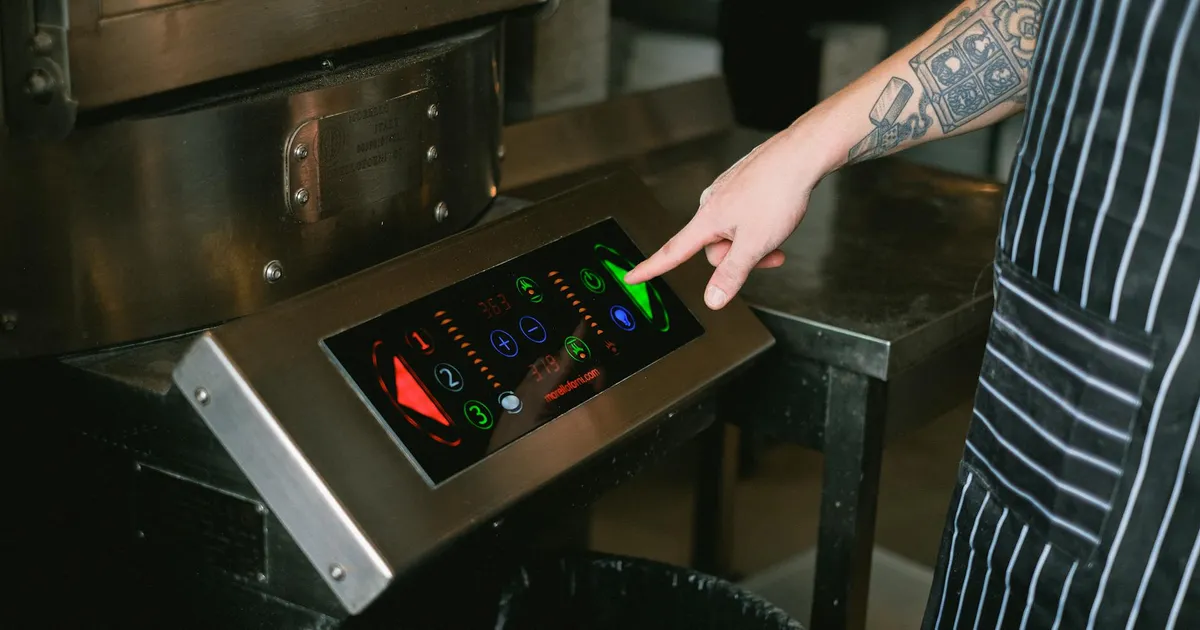
Photo by KitchenTemp via Pexels
What Is a Critical Control Point?
A Critical Control Point (CCP) is a step in the food preparation process where a control measure can be applied and is essential to prevent or eliminate a food safety hazard or reduce it to an acceptable level.
The key word is "essential." Not every step in food preparation is a CCP — only the steps where losing control means a hazard will reach the consumer without any opportunity to fix it. A CCP is the last line of defense for a specific hazard.
Understanding CCPs requires first understanding what they are not. Washing your hands before handling food is critically important, but it is not a CCP — it is a prerequisite program. The difference: a prerequisite program controls the general environment; a CCP controls a specific, identified hazard at a specific point in the process.
The CCP Decision Tree
The Codex Alimentarius Commission, which co-developed international HACCP standards with the FDA, provides a decision tree for determining whether a step is a CCP. Work through these questions for each hazard identified in your hazard analysis:
Question 1: Do control measures exist for the identified hazard at this step?
- If No: Is control necessary for safety? If yes, modify the step or the process. If no, it is not a CCP.
- If Yes: Proceed to Q2.
Question 2: Is this step specifically designed to eliminate the hazard or reduce it to an acceptable level?
- If Yes: This is a CCP. Stop here.
- If No: Proceed to Q3.
Question 3: Could contamination with the identified hazard occur in excess of acceptable levels at this step?
- If No: Not a CCP.
- If Yes: Proceed to Q4.
Question 4: Will a subsequent step eliminate the identified hazard or reduce its occurrence to an acceptable level?
- If Yes: This step is NOT a CCP (the subsequent step is the CCP).
- If No: This step IS a CCP.
Working through this decision tree prevents two common mistakes: identifying too many CCPs (which creates monitoring burden without safety benefit) and missing real CCPs (which leaves hazards uncontrolled).
Standard CCPs in Full-Service Restaurants
Most restaurants will identify CCPs in the following areas. The exact CCPs for your operation depend on your specific menu and processes.
CCP 1: Receiving
Hazard controlled: Biological — receiving food that is already at pathogen-growth-permitting temperatures, or receiving food contaminated by poor supplier practices.
Why it's a CCP: Receiving is your first and best opportunity to reject unsafe food before it enters your kitchen. Once contaminated food is in your cooler with your other inventory, the hazard is inside your operation.
Critical limits:
- Refrigerated foods: ≤41°F at point of delivery (FDA Food Code §3-202.11)
- Frozen foods: no evidence of thawing and refreezing (ice crystals, pooled liquid, unusual textures)
- Hot foods (if receiving prepared items): ≥135°F
What to check at receiving: Probe temperature of raw proteins; check packaging integrity; review supplier's time-temperature documentation for long-distance shipments.
CCP 2: Cold Holding
Hazard controlled: Biological — growth of pathogens in the temperature danger zone (41°F–135°F).
Why it's a CCP: Most foodborne illness is caused by bacterial growth during improper cold holding. Bacteria can double every 20 minutes in the danger zone. Time and temperature are your primary tools against this.
Critical limit: ≤41°F (FDA Food Code §3-501.16)
Monitoring considerations:
- Monitor the food temperature, not just the air temperature of the unit
- Multiple coolers require separate monitoring records
- Consider high-risk items (raw proteins, cut melons, cooked pasta, dairy) for more frequent checks
CCP 3: Cooking
Hazard controlled: Biological — survival of pathogens including Salmonella, Campylobacter, E. coli O157:H7, and others.
Why it's a CCP: Cooking is the primary kill step for bacterial pathogens. If food is not cooked to the required internal temperature, pathogens that were on the raw product may survive and cause illness.
Critical limits by product type (FDA Food Code §3-401.11):
| Food Product | Required Internal Temp | Hold Time | |---|---|---| | Poultry (whole, ground, stuffed) | 165°F | 15 seconds | | Ground beef, pork, other ground meats | 155°F | 15 seconds | | Whole muscle beef, pork, lamb | 145°F | 15 seconds | | Fish and shellfish | 145°F | 15 seconds | | Shell eggs (immediate service) | 145°F | 15 seconds | | Shell eggs (pooled, hot held) | 155°F | 15 seconds | | Wild game | 165°F | 15 seconds | | Stuffed meats and pasta | 165°F | 15 seconds | | Microwave cooked (meats, poultry, fish, eggs) | 165°F | Allow 2-min stand time |
Monitoring note: Always measure at the thickest part of the product, away from bone. For thin products like hamburger patties, use a thin-tip probe thermometer and measure through the side.
CCP 4: Hot Holding
Hazard controlled: Biological — growth of pathogens in cooked food held below 135°F.
Why it's a CCP: Cooking brings food to a safe temperature, but hot holding maintains that safety margin during service. Food that drops below 135°F is re-entering the danger zone, where bacteria that survived cooking (or were introduced after cooking) can multiply.
Critical limit: ≥135°F (FDA Food Code §3-501.16)
Common problems:
- Hot holding equipment set too low (check thermostat accuracy with a probe thermometer)
- Stirring or covering requirements not followed
- Products added to holding unit before it reaches holding temperature
- Products held too long (even within temperature limits, quality degrades and risk from post-cooking contamination increases)
CCP 5: Cooling
Hazard controlled: Biological — growth of C. perfringens, B. cereus, and other spore-forming bacteria that can survive cooking and then grow rapidly as food cools.
Why it's a CCP: This is one of the most frequently violated CCPs in restaurants. Cooling a large pot of soup in the refrigerator takes much longer than most operators expect. During that long, slow cool, bacteria can reach dangerous levels.
Critical limits (FDA Food Code §3-501.14):
- Step 1: From 135°F to 70°F within 2 hours
- Step 2: From 70°F to 41°F within 4 hours (6 hours total from 135°F)
Approved cooling methods:
- Ice bath (transfer to shallow pans and nest in ice water, stirring frequently)
- Ice paddles (fill with water, freeze, use to stir hot food)
- Blast chiller
- Dividing into smaller, shallower portions
- Adding ice as an ingredient where appropriate

CCP 6: Reheating
Hazard controlled: Biological — survival of pathogens introduced after initial cooling and storage.
Why it's a CCP: Food that has been cooled and stored may have been contaminated during handling. Reheating to a sufficient temperature is the kill step that protects against that post-cooking contamination.
Critical limit: 165°F within 2 hours for all reheated food that will be hot held (FDA Food Code §3-403.11)
Important distinction: Food reheated and served immediately (returned from a cooling event, plated immediately) still needs to reach 165°F. Food reheated and then placed in hot holding equipment must reach 165°F within 2 hours and then be maintained at ≥135°F.
CCPs for Special Processes
Some restaurants use processes that require additional CCP analysis:
Cooking at Reduced Temperatures (Sous Vide)
Sous vide cooking involves cooking food at temperatures below the standard critical limits for extended periods. The safety equivalency is achieved through time-at-temperature combinations. For example, beef at 130°F for 121 minutes achieves the same pathogen reduction as 145°F for 15 seconds. These operations require a variance from your local health department and a specific HACCP plan for the process.
Smoking and Curing
Smoking and curing operations can be used to reduce water activity or pH as a pathogen control measure. These operations require a specialized hazard analysis and typically a health department variance.
Raw Animal Foods Served Undercooked
Offering items like rare beef, sushi, or runny eggs requires consumer advisory postings at minimum. Many jurisdictions require a variance for certain raw animal food preparations.
How Many CCPs Should You Have?
There is no "right" number of CCPs. More is not better. A HACCP plan with 12 CCPs and mediocre monitoring is far less effective than a plan with 5 well-monitored CCPs.
Most full-service restaurants will identify between 4 and 8 CCPs depending on their menu complexity and processes. If you are identifying more than 10, re-examine each one using the decision tree — you may be misclassifying prerequisite program steps as CCPs.
If you are identifying fewer than 3, you may be missing real CCPs, particularly around cold holding and cooling.
How KitchenTemp Helps
KitchenTemp structures your monitoring workflow around your specific CCPs. Define each CCP in the system, set the critical limit, and build the monitoring schedule. Staff receive prompts at the right times for each CCP, and readings outside critical limits automatically trigger corrective action documentation.
The result is a complete, defensible CCP monitoring record — for every CCP, every shift, every day. Start your free trial to see how KitchenTemp manages your CCPs automatically.