Critical Limits in Food Safety: Complete Temperature and Time Reference
Every critical limit restaurants need: FDA Food Code 2022 cooking temps, cold holding, hot holding, cooling, and reheating — with a complete reference table.
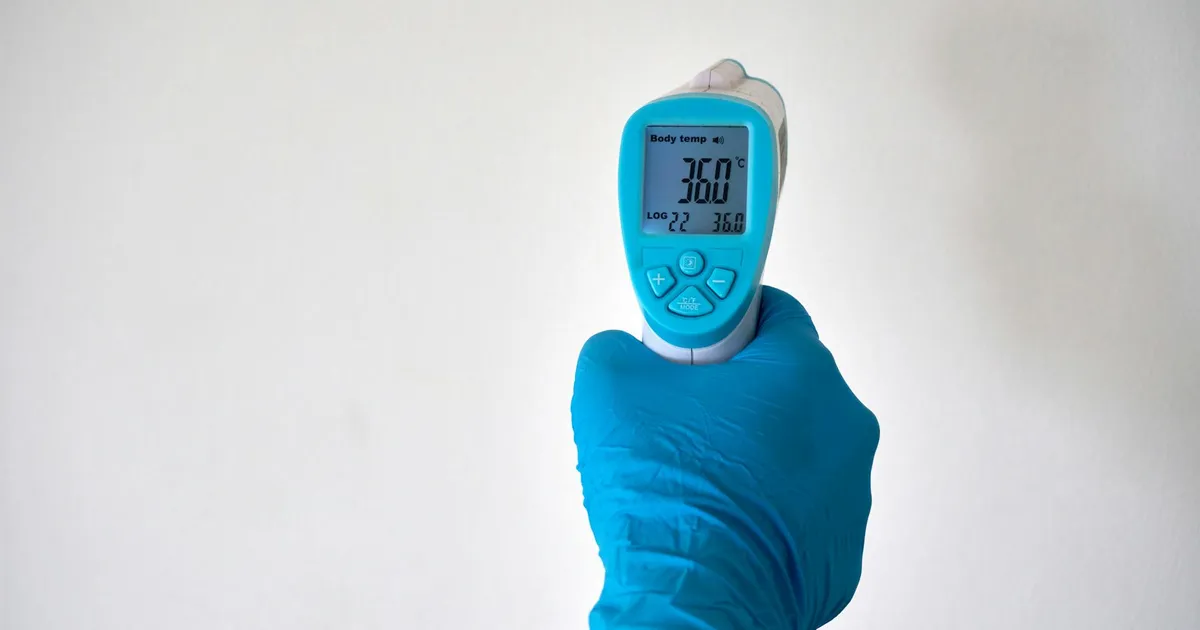
Photo by KitchenTemp via Pexels
What Are Critical Limits?
In HACCP, a critical limit is the maximum or minimum value to which a biological, chemical, or physical hazard must be controlled at a critical control point to prevent, eliminate, or reduce the occurrence of a food safety hazard.
Critical limits are the numbers that define the boundary between safe food and unsafe food. They must be:
- Measurable: a specific temperature, time, pH, water activity, or other quantifiable parameter
- Science-based or regulatory-based: derived from FDA requirements, peer-reviewed research, or validated scientific evidence
- Specific: not "cold enough" but "41°F or below"
- Documented: written into your HACCP plan before operations begin
Critical limits are not suggestions or targets — they are the legal and scientific thresholds your kitchen must meet. When food crosses a critical limit in the wrong direction, your corrective action procedure must activate.
The Temperature Danger Zone
The single most important concept in food safety temperature management is the temperature danger zone: 41°F to 135°F (5°C to 57°C).
Within this range, most foodborne pathogens can multiply rapidly. Staphylococcus aureus, Salmonella, E. coli, Listeria, and Clostridium perfringens all thrive between 41°F and 135°F. At the optimal range of 70°F–120°F, some bacteria can double their population every 20 minutes.
Your critical limits for cold holding (≤41°F) and hot holding (≥135°F) are designed to keep food out of this danger zone. Your cooking critical limits are designed to kill pathogens that may have been present on raw food.
Cooking Critical Limits
Cooking is the primary kill step for biological hazards in most restaurant HACCP plans. The FDA Food Code 2022 (§3-401.11) establishes the following minimum internal temperatures:
FDA Food Code 2022 Cooking Temperature Reference
| Food Category | Minimum Internal Temp | Minimum Hold Time | Pathogens Targeted | |---|---|---|---| | Poultry — whole, pieces, ground | 165°F (74°C) | 15 seconds | Salmonella, Campylobacter | | Ground beef, pork, or other ground meats | 155°F (68°C) | 15 seconds | E. coli O157:H7, Salmonella | | Whole muscle beef (steaks, roasts) | 145°F (63°C) | 15 seconds | Salmonella, E. coli O157:H7 (surface) | | Whole muscle pork | 145°F (63°C) | 15 seconds | Trichinella, Salmonella | | Lamb and veal (whole muscle) | 145°F (63°C) | 15 seconds | Salmonella | | Fish and shellfish | 145°F (63°C) | 15 seconds | Vibrio, Listeria, parasites | | Shell eggs — immediate service | 145°F (63°C) | 15 seconds | Salmonella Enteritidis | | Shell eggs — hot holding after cooking | 155°F (68°C) | 15 seconds | Salmonella Enteritidis | | Pooled eggs | 155°F (68°C) | 15 seconds | Salmonella Enteritidis | | Wild game | 165°F (74°C) | 15 seconds | Trichinella, Salmonella, E. coli | | Stuffed meats or pasta | 165°F (74°C) | 15 seconds | Multiple (stuffing creates internal env.) | | Microwave-cooked meats, poultry, fish, eggs | 165°F (74°C) | 2-min rest after cooking | Multiple (uneven microwave heating) | | Commercially processed ready-to-eat foods (reheated) | 135°F (57°C) | 15 seconds | Multiple (pre-cooked, reheat to hot holding) |
Alternative Temperature-Time Combinations
FDA Food Code §3-401.11(B) allows alternative cooking times for whole muscle beef and pork when you can achieve the same lethality through extended time at lower temperatures:
| Internal Temperature | Hold Time (beef/pork) | |---|---| | 130°F (54°C) | 112 minutes | | 135°F (57°C) | 37 minutes | | 140°F (60°C) | 12 minutes | | 145°F (63°C) | 4 minutes | | 150°F (66°C) | 72 seconds | | 158°F (70°C) | <1 second (instantaneous) |
These alternatives apply to whole muscle intact beef and pork only. They are typically used in high-end restaurant environments where precise temperature control enables cooking to medium-rare with documented time-at-temperature compliance.
Cold Holding Critical Limit
Critical limit: ≤41°F (5°C) for all potentially hazardous foods (time/temperature control for safety foods)
Source: FDA Food Code 2022 §3-501.16(B)
Cold holding keeps food below the temperature at which most pathogens can grow to dangerous levels. Listeria monocytogenes, notably, can grow even at refrigeration temperatures — but very slowly, which is why date labels and shelf-life management are also critical controls.
Cold Holding Monitoring Best Practices
- Measure food temperature, not just air temperature (air temperature in a cooler can be 38°F while food near the door is 44°F)
- Use calibrated probe thermometers, not ambient-air thermometers only
- Position digital data loggers in the warmest zones of the unit (near the door, top shelves)
- Set operational targets 2-3°F below the critical limit (39°F or below) to maintain a safety buffer
- Check temperatures at opening, mid-shift, and closing minimum
Equipment Temperature vs. Food Temperature
| Unit Type | Air Temp Target | Food Temp Critical Limit | |---|---|---| | Walk-in cooler | 35–38°F | ≤41°F | | Reach-in refrigerator | 35–38°F | ≤41°F | | Prep table (cold rail) | ≤41°F (surface) | ≤41°F | | Display case | ≤38°F | ≤41°F |
Hot Holding Critical Limit
Critical limit: ≥135°F (57°C) for all hot-held potentially hazardous foods
Source: FDA Food Code 2022 §3-501.16(A)
Once food is cooked, it must be served immediately or maintained at 135°F or above to prevent bacterial growth. Food that drops below 135°F is re-entering the temperature danger zone.
Hot Holding Monitoring Best Practices
- Check every 2 hours during service periods
- Stir or rotate food during monitoring to ensure even temperature distribution
- Verify that equipment is reaching holding temperature before loading food
- Do not put room-temperature food into hot holding equipment and expect it to come up to temperature — that is a heating function, not a holding function
- Use steam table water at a rolling boil or set to maintain 165°F+ water temperature
Cooling Critical Limits
Critical limits (FDA Food Code 2022 §3-501.14):
- Stage 1: Cool from 135°F to 70°F within 2 hours
- Stage 2: Cool from 70°F to 41°F within 4 hours (6 hours total from start of cooling)
Cooling is one of the most common HACCP failure points in restaurants. The two-stage process is specifically designed to address C. perfringens, which has an optimal growth range of 109°F–117°F and spores that survive cooking. Getting food through this range quickly (Stage 1) prevents the most dangerous growth window.
Cooling Rate Guide by Container and Method
| Cooling Method | Starting Volume | Estimated Time to 70°F | |---|---|---| | Shallow pan, uncovered, in walk-in | 1 gallon of soup | 45–75 minutes | | Ice bath with stirring | 1 gallon of soup | 20–35 minutes | | Blast chiller | 1 gallon of soup | 15–25 minutes | | Large stockpot, walk-in, covered | 5 gallons of soup | 4+ hours (FAILS) | | Ice bath, no stirring, large pot | 5 gallons of soup | 3–4 hours (MARGINAL) | | Divided into shallow pans, ice bath | 5 gallons of soup | 30–60 minutes |
Reheating Critical Limit
Critical limit: ≥165°F (74°C) within 2 hours for food that will be hot held
Source: FDA Food Code 2022 §3-403.11
Food that has been previously cooked and cooled must be reheated rapidly to 165°F. This is not about bringing food up to hot holding temperature (135°F) — it is about achieving a pasteurization kill step for any contamination that occurred during cooling and storage.
Key distinction: Food reheated for immediate service does not need to be held at 135°F afterward, but still must reach 165°F before serving if there is any reasonable expectation of contamination during storage.
Critical Limits for Other Parameters
Temperature is not the only critical limit category. Depending on your processes, you may use:
| Parameter | When Used | Example Critical Limit | |---|---|---| | Time | Time as Public Health Control (TPHC) | ≤4 hours total outside temperature control | | pH | Acidification, pickling | pH ≤4.6 | | Water activity (aw) | Drying, curing | aw ≤0.85 | | Salt concentration | Curing | ≥3.5% aqueous salt concentration | | Alcohol concentration | Some preserved items | Varies by product |
Most restaurants will only use temperature and time as critical limit parameters. The pH, water activity, and concentration-based controls are primarily used in more specialized food processing operations.
Operating Limits vs. Critical Limits
A useful concept: set your operating limits more conservatively than your critical limits. This gives you a safety margin before action is required.
| CCP | Critical Limit | Recommended Operating Limit | |---|---|---| | Cold holding | ≤41°F | ≤38°F | | Hot holding | ≥135°F | ≥140°F | | Cooking — poultry | ≥165°F | ≥170°F (for temp variation in batch cooking) | | Walk-in cooler air temp | Food ≤41°F | Equipment air at 35–38°F |
Operating outside your operating limit triggers a review. Operating outside your critical limit triggers your corrective action procedure.
How KitchenTemp Helps
KitchenTemp lets you configure the exact critical limits for each CCP in your HACCP plan. When a staff member logs a temperature that crosses a critical limit, the system immediately prompts for corrective action documentation — time of deviation, product affected, action taken, and final disposition.
Every reading is timestamped. Every corrective action is linked to the monitoring record that triggered it. Your inspecting health authority gets a complete picture of your critical limit compliance at a glance.
Start your free trial at KitchenTemp and ensure your critical limits are never missed, and never undocumented.