Grocery Store Deli Temperature Logs: Compliance for High-Risk Food Service
Temperature logging requirements for grocery store delis and prepared food departments. FDA compliance, high-risk foods, display case management, and inspection readiness.
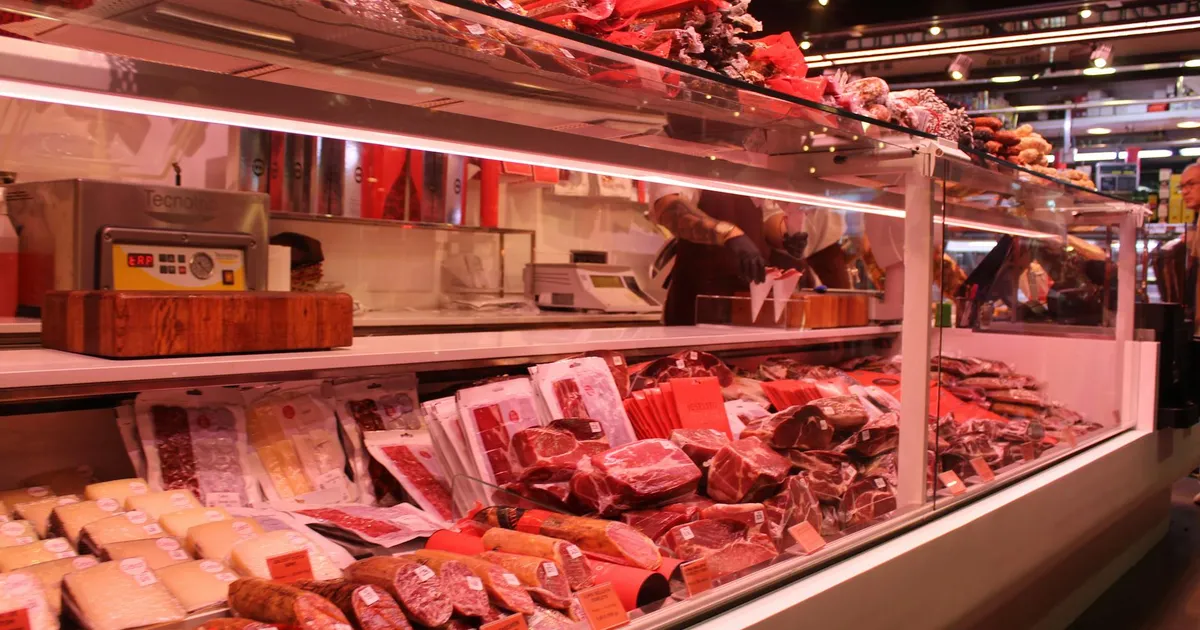
Photo by KitchenTemp via Pexels
Why Deli Operations Are High-Risk
The grocery store deli department is one of the highest-risk food service environments for a reason that other food service formats do not face in the same way: the combination of ready-to-eat protein products, extended display periods, and cross-contamination risk from slicing equipment creates multiple potential pathogen exposure points.
Deli operations historically have been linked to some of the most significant Listeria and Salmonella outbreaks in the food service industry. The 2023 Boar's Head Listeria outbreak — traced to contaminated deli meats at a processing facility — resulted in 59 illnesses and 9 deaths across 18 states and illustrated the stakes involved in deli food safety.
The risks are controllable, but they require a higher level of vigilance than many deli operations apply. This guide covers the specific temperature management, sanitation, and documentation requirements for grocery store deli and prepared foods departments.
Regulatory Framework for Grocery Deli Operations
Grocery store deli departments are regulated as food service establishments by the same state and local health authorities that regulate restaurants. Most also have additional compliance requirements from:
- The FDA (for products regulated under federal food safety law)
- USDA FSIS (for any meat or poultry products that are processed or prepared on-site)
- Store brand standards (for national or regional grocery chains with corporate food safety programs)
In practice, this means grocery delis are often subject to more regulatory oversight than standalone restaurants, from multiple agencies with overlapping jurisdictions.
Temperature Requirements for Deli Operations
Cold Holding: The Most Critical Control
Cold-holding is the most important temperature control in deli operations. Ready-to-eat deli meats, cheese, prepared protein salads, and cold cuts must be maintained at 41°F or below to prevent Listeria and other cold-hardy pathogen growth.
Listeria monocytogenes is the specific organism that makes deli cold-holding standards so critical. Unlike most foodborne pathogens, Listeria can grow at refrigerator temperatures (slowly, but measurably) and is highly persistent on food contact surfaces. Once Listeria establishes in a deli environment — in a slicer, in a display case drain, in a floor drain — it is extremely difficult to eradicate.
Deli display case temperatures: Display cases must maintain all product at 41°F or below. Monitor display case temperatures at the beginning and end of each service day, and verify with a product temperature check (not just case air temperature) at least once daily. Air temperature in a display case can be at the setpoint while product temperatures drift higher due to:
- Overloading the case (blocked airflow)
- Cases left open during restocking
- Defrost cycles that run longer than expected
- Mechanical failure in the refrigeration system
Walk-in cooler temperatures: Walk-in coolers holding deli products must maintain 41°F or below. Monitor and log daily.
Sliced product holding: Once deli meat is sliced, it has significantly more surface area exposed to potential contamination and must be held at 41°F or below. Sliced product that has been in a display case or open container should be either sold or discarded within the date established by your HACCP plan.
Hot Holding: Prepared Foods and Rotisserie
Grocery delis that serve hot prepared foods (rotisserie chicken, hot soups, hot side dishes) must maintain those items at 135°F or above during service.
Rotisserie chicken is among the highest-volume hot-held items in grocery deli operations. Key requirements:
- Cook to 165°F internal temperature (verified by probe thermometer)
- Transfer immediately to a hot-holding rotisserie display that maintains 135°F or above
- Establish a maximum hold time after which unsold chicken is either discounted for immediate sale or discarded
- Log cooking temperatures and transfer times
Rotisserie chicken that has cooled below 135°F during display is a common and consequential violation. Rotisserie displays that do not maintain adequate temperature should be taken out of service until repaired.
Hot soup and side dishes: Monitor temperature every 2 hours during service. Log start-of-service temperatures and at least one mid-service check.
Slicers: The Highest-Risk Equipment in the Deli
The meat and cheese slicer is the single piece of equipment most frequently associated with deli-related foodborne illness. It contacts raw or pre-cooked protein products, is difficult to fully clean and sanitize, and can harbor Listeria in its components if cleaning is inadequate.
FDA Guidance on Slicer Cleaning
The FDA recommends cleaning and sanitizing deli slicers every 4 hours during continuous use. If the slicer is used intermittently, it should be cleaned and sanitized between uses if more than 4 hours have elapsed.
This 4-hour requirement is frequently not met in practice. Slicers that are used throughout a service period and cleaned only at opening and closing have often been in use for 6–8 hours without cleaning. This is a significant food safety gap.
Full Disassembly Cleaning
Slicer cleaning must include full disassembly of all removable parts — the blade, blade cover, product tray, product grip, and any other removable components — to access all surfaces where product residue can accumulate. Wiping down the exterior without disassembling the removable parts is not adequate.
Document each slicer cleaning with time, who cleaned it, and which components were disassembled and cleaned.
Date Labeling and FIFO
Grocery deli operations must date-label all prepared and prepackaged products. Labeling requirements vary by jurisdiction and product type, but best practices include:
- Label all prepared items with the date of preparation and a use-by date
- Establish use-by dates based on HACCP plan analysis — not just a generic "3 days" for all items
- Practice strict FIFO: older product moves to the front of the display; newer product loads behind it
- Conduct daily inventory of all dated items and remove expired product before it reaches the sell date
Use-by dates for common deli products (these are general guidance; verify with your HACCP plan):
- Sliced deli meats: 3–5 days after slicing
- Prepared protein salads (tuna, chicken, egg): 3–5 days
- Prepared side dishes: 3–5 days
- Whole deli meats (unsliced): follow manufacturer's date or 7 days after opening
Cross-Contamination in the Deli
Raw vs. Ready-to-Eat
Any deli operation that handles both raw proteins (for cooking or marinating) and ready-to-eat deli products must implement strict separation protocols. Raw poultry and raw ground beef carry pathogens that are lethal to ready-to-eat deli meats if transferred.
Separate preparation areas, equipment, utensils, and refrigeration for raw and ready-to-eat products where possible. Where shared equipment must be used, cleaning and sanitizing between uses is mandatory — not optional.
Allergen Cross-Contact in the Deli
Deli operations are a particularly high-risk environment for allergen cross-contact because:
- Multiple products containing different allergens are handled on the same slicer
- Customers often request sliced products that are not individually packaged (no label allergen disclosure)
- Staff may not know the allergen content of all products
Train all deli staff on the Big 9 allergens and on your slicer cleaning protocol for allergen cross-contact prevention. When a customer asks about allergens in a specific product, have a process for providing accurate information — not guessing.
Health Inspection Preparation for Deli Operations
Grocery deli departments are inspected with the same criteria as restaurants. Common violations:
- Temperature violations in display cases or hot-holding equipment
- Slicer not cleaned within required frequency
- Inadequate date labeling
- Expired product still in display
- Cross-contamination risks between raw and ready-to-eat areas
- Personal hygiene violations (no gloves on ready-to-eat handling, bare-hand contact)
Maintain temperature logs, slicer cleaning logs, and date labeling records as the primary documentation demonstrating compliance. These are among the first records inspectors review.
HACCP Plan Requirements for Grocery Delis
Most state health codes require grocery deli operations to operate under a HACCP plan or equivalent food safety management system. Key elements of a deli HACCP plan:
- Cold-holding as a CCP with 41°F critical limit
- Cooking temperature as a CCP for all hot prepared foods
- Slicer cleaning as a CCP or prerequisite program with 4-hour critical limit
- Date labeling as a critical prerequisite program
How KitchenTemp Helps
KitchenTemp is designed for the continuous monitoring needs of grocery deli operations. Log display case temperatures, hot-holding checks, slicer cleaning events, and product temperatures in a single system — accessible to department managers from any device.
For deli operations with multiple display cases and prepared food stations, KitchenTemp's multi-station setup ensures that every monitoring point is assigned, tracked, and documented. Corrective actions are guided and recorded automatically.
When your health inspector arrives or your corporate food safety auditor schedules a visit, you produce complete, organized documentation for any time period in seconds.
Start your free trial at KitchenTemp — and protect your deli operation with the documentation it deserves.