Holiday Catering Food Safety: A Complete Guide for Restaurant Operators
Holiday catering multiplies your food safety risks. This guide covers temperature control, transport protocols, and documentation for safe holiday events.
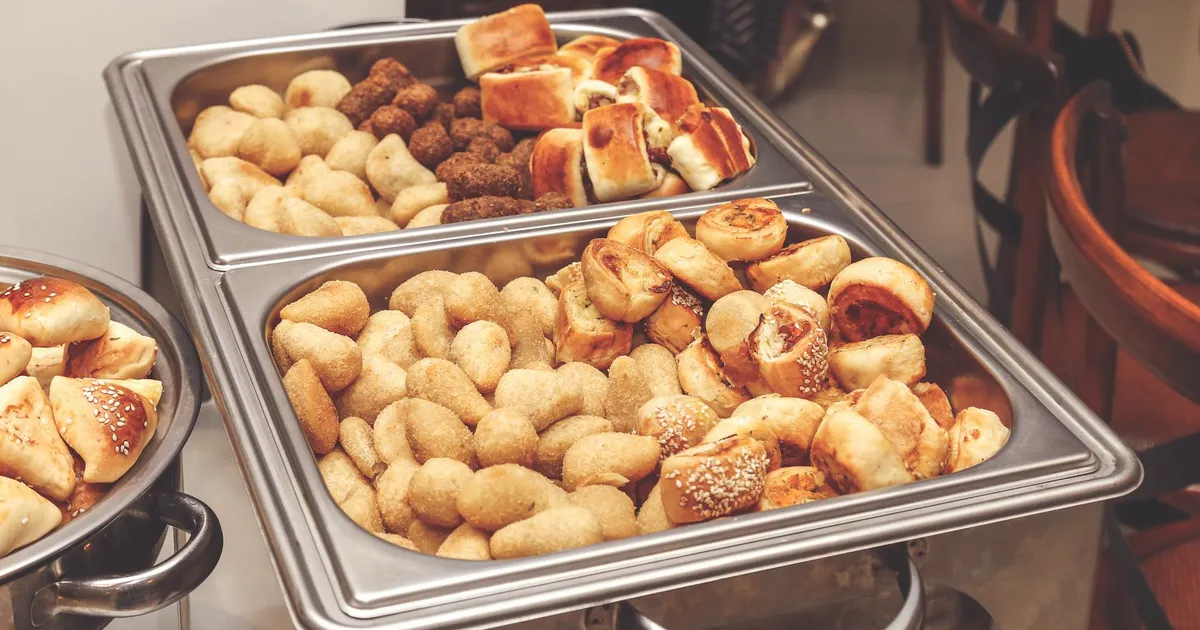
Photo by KitchenTemp via Pexels
Holiday Catering Is Your Highest-Stakes Food Safety Scenario
Your restaurant kitchen is a controlled environment. You know your equipment, your staff, and your procedures. Holiday catering takes you out of that controlled environment and multiplies your food safety risks simultaneously:
- Larger batches cooked in advance (extended cooling and holding windows)
- Transport to unfamiliar locations (cold chain interruption)
- Service at venues with unknown equipment (uncertain holding temperatures)
- New or seasonal staff unfamiliar with your protocols (execution gaps)
- Time pressure (holiday schedules leave no margin)
A foodborne illness incident at a holiday event — a corporate Christmas party, a Thanksgiving banquet, a New Year's Eve gala — can expose your restaurant to significant liability. Guests remember exactly where the food came from. Liability is clear and immediate.
This guide covers the food safety protocols that protect your catering operation through the holiday rush.
The Holiday Catering Risk Profile
Why Holiday Events Are Different
Holiday catering involves risk factors that your restaurant kitchen does not:
Batch size: A holiday event for 200 people might require cooking 80 pounds of chicken, 50 pounds of salmon, and 30 gallons of soup simultaneously. Larger batches take longer to cool and create more surface area for temperature variation.
Advance preparation: Holiday catering almost always involves cooking the day before (or earlier) and reheating at the event. Every additional step in the cook-cool-reheat chain is a potential temperature failure point.
Transport: Food traveling in catering vehicles goes through temperature transitions. Even well-insulated transport is not refrigeration — food that was at 38°F in your walk-in may be at 50°F after two hours in an insulated van on a cold December day.
Venue unknowns: Event venues vary widely in their food equipment quality. A hotel ballroom has commercial equipment. A client's office building has a break room microwave. Understand the venue's equipment before you design the menu and execution plan.
Staffing: Seasonal catering staff hired for the holiday rush may not have the food safety training of your core team. They are handling food under time pressure in unfamiliar environments.
Pre-Event Planning: The Food Safety Foundation
Menu Design for Food Safety
Not every menu item is equally appropriate for catering. When designing your holiday catering menu, consider the food safety profile of each item:
High-risk items (require careful protocol):
- Poultry (must reach 165°F internal, holds poorly)
- Seafood (tight temperature window, degrades quickly)
- Egg-based dishes (quiche, frittata, hollandaise)
- Rice and grain dishes (Bacillus cereus risk in improperly cooled starches)
- Cut melons and leafy greens
Lower-risk items (easier to execute safely at volume):
- Whole roasted meats (large thermal mass, holds temperature well)
- Hard cheeses and charcuterie (low water activity)
- Baked goods
- Dry snacks
If your team and venue equipment are limited, design your menu around lower-risk items. Simplifying the food safety challenge is better than executing a complex menu dangerously.
Venue Assessment
Visit or call the venue before the event to confirm:
- Is there refrigeration on-site? What is its capacity?
- Are there commercial hot-holding units or chafing dishes available, or do you need to bring your own?
- Is there a commercial kitchen available for reheating?
- What is the distance and travel time from your kitchen?
- Is there loading dock access for catering equipment?
If the venue lacks adequate hot-holding equipment, either bring your own or adjust the menu to items that can be served at room temperature safely (charcuterie, cold apps, baked goods).

The Cook-Cool-Reheat Chain
Holiday catering almost always involves this three-stage process. Each transition is a potential food safety failure point.
Stage 1: Cooking to Safe Temperature
All potentially hazardous foods must reach appropriate internal temperatures:
| Food Item | Required Internal Temperature | |-----------|------------------------------| | Poultry (whole or ground) | 165°F | | Ground beef and pork | 155°F | | Pork, veal, lamb (whole muscle) | 145°F | | Fish and shellfish | 145°F | | Stuffed foods | 165°F | | Eggs (for immediate service) | 145°F |
Document the final cooking temperature of every batch. This is your first HACCP Critical Control Point.
Stage 2: Cooling
The FDA two-stage cooling rule is critical and frequently violated at catering operations:
- Stage 1: Cool from 135°F to 70°F within 2 hours
- Stage 2: Cool from 70°F to 41°F within 4 hours
Total cooling time from 135°F to 41°F: no more than 6 hours.
For large-batch catering production, this requires active cooling methods:
- Ice bath: Place hot containers in an ice-water bath, stirring frequently. Most effective for soups, sauces, and liquid dishes.
- Shallow pan cooling: Divide large batches into shallow pans (2 inches or less) to increase surface area and speed cooling. Do not stack hot pans.
- Blast chiller: If available, the fastest and most reliable option. Worth the investment if you do significant catering volume.
- Ice wands: Insert food-safe ice wands directly into soups and sauces to speed center cooling.
Document cooling temperatures at both the 2-hour and 6-hour marks for every batch. This documentation is your defense if a cooling failure leads to a foodborne illness claim.
Stage 3: Transport
Properly cooled food must be transported at safe temperatures:
- Cold food: Must remain at 41°F or below. Use NSF-rated insulated containers with ice or refrigerated transport units for anything over 30 minutes.
- Hot food: If transporting hot, maintain at 135°F or above using commercial hot-holding equipment or insulated carriers with chafing fuel. Most insulated carriers without active heating cannot maintain 135°F for more than 30–60 minutes.
Temperature check on arrival: Before any food is unloaded at the venue, measure temperatures of both cold and hot items and log them. This documents whether the food was in safe range when it left your control and when it arrived at the venue.
Stage 4: Reheating (if applicable)
Cold food that was cooked and cooled must be reheated to 165°F before service. Document the reheating temperature.
The two-hour window: Once fully reheated food is placed for service (on steam tables, chafing dishes, serving platters), the two-hour service clock starts. Any food that has been out for service for more than 2 hours should be discarded.
Monitor holding temperatures throughout service and log readings every 30 minutes. Steam tables should maintain 135°F. Cold buffet items should maintain 41°F.
Staffing for Holiday Catering Food Safety
Pre-Event Briefing
Before every catering event, brief all staff — including seasonal and day-of hires — on:
- Which items are high-risk and require temperature monitoring
- The two-hour service discard rule
- Correct use of thermometers
- Who is responsible for temperature monitoring at the event
- What to do if a temperature reading is out of range
A 10-minute briefing before the event load-out is worth every minute.
Designate a Food Safety Lead
Every catering event should have a designated food safety lead — a named individual responsible for:
- Logging temperatures at each stage (cook, cool, transport, arrival, service)
- Making go/no-go decisions on any questionable food
- Communicating with the event manager about any food safety issues
This role should not default to "whoever remembers to check temperatures." Assign it explicitly and confirm the assignment at the pre-event briefing.
Documentation for Catering Events
A complete catering event food safety record includes:
- Cooking records: Final internal temperature, time, and staff for each batch
- Cooling records: 2-hour and 6-hour temperature checks for each batch
- Transport records: Pre-departure and on-arrival temperatures for all items
- Service records: Temperature checks every 30 minutes during service
- Corrective actions: Any food discarded and the reason
This documentation package is your legal defense if a guest reports illness following the event. Without it, you have no way to demonstrate that the food was handled correctly at every stage.
Digital temperature logging makes catering documentation practical. Your food safety lead uses the same mobile app at the event venue that your team uses in the kitchen — logging each stage with automatic timestamps and cloud backup.
How KitchenTemp Helps
KitchenTemp's mobile app works wherever your catering team is. Log temperatures on a mobile phone at the event venue, on the delivery truck, or in your production kitchen — everything syncs to the same cloud account with automatic timestamps.
For the holiday catering rush, you can create location-specific equipment lists (Event Kitchen, Transport Van, Venue Chafing Station) and assign different alert thresholds for each. Your food safety lead gets alerts on their phone if any reading is out of range — even if you are back at the restaurant.
After the event, generate a complete compliance report showing every temperature reading across the full cook-cool-transport-service chain. That report is your documentation package, ready in one click.
Get your catering food safety documentation set up at KitchenTemp before the holiday rush begins.