Hot Holding Temperature Requirements: 135°F Minimum for Restaurants
Hot holding requires 135°F (57°C) minimum. This guide covers steam tables, heat lamps, checks, and what to do when food drops below the threshold.
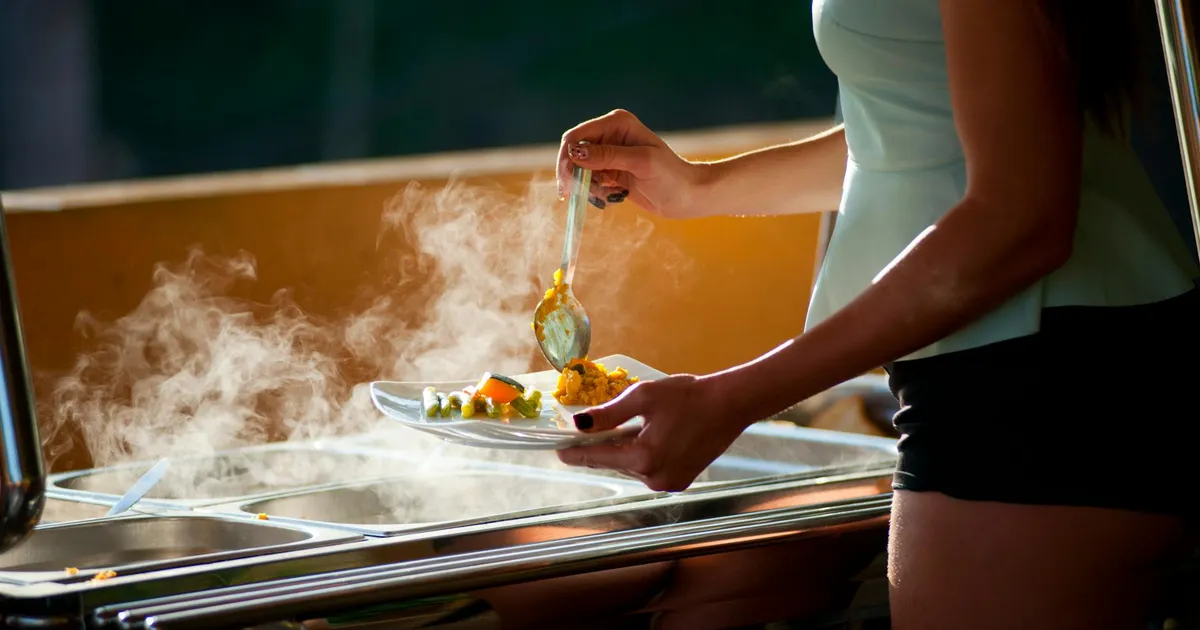
Photo by KitchenTemp via Pexels
What Is Hot Holding?
Hot holding is the practice of keeping cooked food at a safe temperature between the time it is cooked and the time it is served. It applies any time food is not served immediately after cooking: steam tables, heat lamps, holding cabinets, chafing dishes, and any other warming equipment.
The FDA Food Code minimum for hot holding is 135°F (57°C). Food must be maintained at or above this temperature at all times while in hot holding. This is not a cooking requirement — food must already be cooked to its appropriate safe temperature before being placed in hot holding equipment. Hot holding equipment is designed to maintain temperature, not to cook food or bring undercooked items to safe temperature.
Failing to maintain 135°F (57°C) puts food into the danger zone (41–135°F / 5–57°C), where bacterial growth accelerates. The clock starts the moment food drops below the threshold.
The Two-Hour Rule After Temperature Drops
If hot-held food falls below 135°F (57°C), you have a two-hour window:
- Under 2 hours in the danger zone: Reheat to 165°F (74°C) immediately, then return to hot holding above 135°F (57°C).
- More than 2 hours in the danger zone: The food must be discarded. There is no corrective action available beyond this point.
The practical implication: if you do not know when the food dropped below 135°F (57°C), you cannot know whether the two-hour window has been exceeded. This is why continuous monitoring and logged temperature checks are essential — they establish the timeline.
Hot Holding Equipment: Capabilities and Limitations
Steam Tables
Steam tables are the most common hot holding device in restaurants. They use wet heat (steam or hot water) to maintain temperature in hotel pans. Best practices:
- Preheat the steam table before adding food. Adding hot food to a cold steam table causes the food temperature to drop significantly.
- Cover pans when possible to retain heat and reduce evaporation.
- Do not stack hotel pans. The bottom of the upper pan insulates the top of the lower pan, creating cold spots.
- Fill pans to the correct depth. Overfilling creates a thick mass that the steam table may struggle to maintain at temperature throughout.
- Check temperatures at the coolest point — typically the center of the food mass, not the edge near the heat source.
Heat Lamps
Heat lamps use infrared radiation to maintain surface temperature. They work well for plated items, baked goods, and items with low surface area. Limitations:
- Heat lamps do not maintain temperature uniformly throughout a deep food mass. They are not appropriate for soups, stews, or large casseroles.
- Food can dry out significantly under heat lamps. This limits practical holding time even when temperature is maintained.
- The effective zone is close to the lamp. Items at the edge of the holding shelf may not receive adequate heat.
Holding Cabinets
Insulated holding cabinets (also called hot boxes or holding warmers) use controlled hot air to maintain temperature. They are well-suited for large items (whole roasts, sheet pans) and are more energy-efficient than steam tables for extended holds.
- Preheat before loading.
- Do not open the door more than necessary — each opening drops the ambient temperature.
- Monitor with a probe thermometer, not just the cabinet thermostat. Cabinet thermostats can drift.
Chafing Dishes
Chafing dishes use fuel burners or electric heating elements under a water pan. Common in catering and buffet service. Key limitations:
- Fuel output varies as the fuel depletes. Late-service temperatures in a chafing dish may be significantly lower than early-service temperatures.
- The food pan can develop hot spots directly over the heat source and cool spots at the edges.
- Check temperature every 30 minutes during extended service.

Temperature Check Frequency and Logging
The FDA Food Code does not specify a mandatory check frequency for hot holding — it specifies that food must be maintained at 135°F (57°C) or above. Most health departments and HACCP programs interpret this as requiring checks frequent enough to detect and act on temperature drops within the two-hour corrective action window.
Best practice: check hot-held food every 30 minutes. This gives you one data point at the midpoint of the two-hour window, ensuring you have time to take corrective action if a reading is low.
Your hot holding temperature log should record:
- Date and service period (lunch, dinner, catering event)
- Item and equipment location
- Temperature at each check interval
- Employee name
- Corrective action if temperature was below 135°F (57°C)
Common Hot Holding Failures and How to Prevent Them
Problem: Food loaded too cold
If food is placed in hot holding equipment before it is cooked to the appropriate internal temperature, the equipment cannot bring it up to temperature. Hot holding equipment is a holder, not a cooker.
Prevention: Verify cooking temperature before loading. Never use a steam table to finish cooking.
Problem: Equipment not preheated
Adding cooked food at 160°F to a steam table at room temperature will drag the food temperature down rapidly.
Prevention: Turn on steam tables and holding cabinets at least 30 minutes before service begins. Verify the equipment has reached operating temperature before loading food.
Problem: Low-volume holding periods
During slow service, large quantities of food sitting in hot holding for extended periods are at risk. Less food in a pan loses temperature faster because there is less thermal mass to retain heat.
Prevention: Use smaller hotel pans during slow periods. Refresh product from the back kitchen rather than holding large quantities all day.
Problem: Thermostat calibration drift
Hot holding equipment thermostats can read inaccurately, especially on older equipment. The thermostat may indicate 140°F while actual food temperature is 128°F.
Prevention: Verify food temperature with a calibrated probe thermometer — never rely solely on the equipment thermostat.

Specific Item Considerations
| Hot-Held Item | Common Issue | Best Practice | |---------------|-------------|--------------| | Soups and stocks | Uneven temp; surface hotter than bottom | Stir before every check; probe center | | Rice and grains | Dense mass retains cold; surface temp misleads | Probe 2 inches below surface | | Fried items (fries, wings) | Heat lamps can't maintain center temp | Limit hold time; refresh frequently | | Sliced roasts | Thin slices cool fast; lose moisture | Cover with foil or use a covered cabinet | | Sauces | Skin formation insulates surface; bottom may burn | Stir regularly; use lower heat |
How KitchenTemp Helps
KitchenTemp's scheduled temperature check reminders make it impossible for your team to forget the 30-minute interval. When a hot holding check falls below 135°F (57°C), the app immediately prompts the corrective action protocol — log it, reheat it, or discard it — and records the entire sequence with a timestamp. Your health inspector sees a complete, gapless hot holding record for every service period. Try KitchenTemp free at /signup and eliminate the most common temperature compliance gap in food service.