Personal Hygiene for Food Safety: Standards Every Restaurant Employee Must Follow
Personal hygiene standards every restaurant worker must know. Covers handwashing, illness policies, glove use, uniforms, and jewelry rules for food safety compliance.
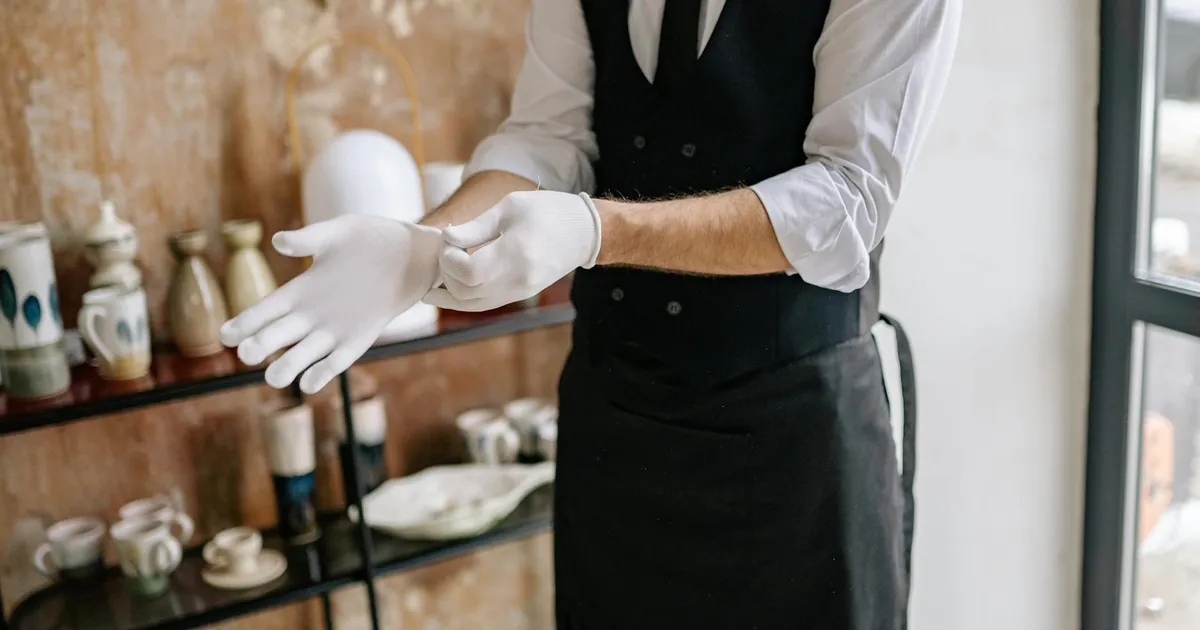
Photo by KitchenTemp via Pexels
Why Personal Hygiene Is the First Line of Defense
In the chain of food safety, personal hygiene sits at the very beginning. Before food is received, stored, prepared, cooked, or served, a person has touched it. If that person carries a pathogen — on their hands, in a respiratory secretion, or through an infected wound — they have the potential to introduce it into the food supply.
The FDA estimates that improper personal hygiene is a contributing factor in the majority of foodborne illness outbreaks linked to food service. Of the specific risk factors identified by the CDC, contamination by infected food workers is consistently among the top causes.
Personal hygiene is not just about looking professional. It is the most direct way a food handler can prevent causing harm.
Handwashing: The Most Critical Hygiene Practice
No single practice in food safety is more impactful than proper handwashing. Norovirus — the most common cause of foodborne illness outbreaks in the United States — is spread primarily through contact with contaminated hands. The pathogen can survive on surfaces for days and can cause illness with as few as 18 viral particles.
The Correct Handwashing Procedure
Many people believe they know how to wash their hands. The correct procedure, as defined by the FDA and required in all food service settings, is:
- Wet hands and forearms with warm running water
- Apply enough soap to create a lather
- Scrub vigorously for at least 20 seconds — focus on the backs of hands, between fingers, and under fingernails
- Rinse thoroughly under running water
- Dry with a single-use paper towel or air dryer
- Use the paper towel to turn off the faucet (to avoid recontaminating clean hands)
The entire process should take approximately 20 seconds from step 1 to step 5. Singing "Happy Birthday" twice is a useful timing heuristic that food safety trainers often use.
When Handwashing Is Required
- Immediately before starting food preparation
- After handling raw meat, poultry, or seafood
- After touching the face, hair, nose, or mouth
- After using the restroom
- After handling garbage or compost
- After using cleaning chemicals or taking out trash
- After coughing or sneezing into hands
- After handling money, a phone, or any non-food-contact surface
- After removing gloves
- After returning from a break
Handwashing vs. Hand Sanitizer
Alcohol-based hand sanitizer is a supplement to handwashing, not a substitute. It is effective against many pathogens but NOT effective against Norovirus or C. difficile. When handwashing facilities are available — which they should be in all food service settings — hands must be washed with soap and water, not just sanitized.
Hand sanitizer may be used in addition to handwashing between tasks where frequent contamination is a concern, but it should never replace the wash-rinse-dry sequence.
Illness Reporting and Exclusion Policy
This is the area where most restaurants are weakest in their hygiene policies. The pressure on hourly workers to come in regardless of illness is significant — both economic (no work, no pay) and social (not wanting to leave the team short-staffed). A good illness policy acknowledges this reality while making non-negotiable the baseline requirement to stay home when sick.
Symptoms That Require Staying Home
Under FDA Food Code guidance, any food handler who is experiencing the following must be excluded from the food service establishment:
- Vomiting (within the past 24 hours)
- Diarrhea (within the past 24 hours)
- Jaundice (yellowing of the skin or eyes — must be reported to the health department)
- Sore throat with fever
Diagnosed Illnesses That Require Exclusion
Food handlers diagnosed with any of the following must be excluded and may not return until cleared by a medical professional:
- Salmonella Typhi
- Shiga toxin-producing E. coli (STEC)
- Hepatitis A
- Norovirus
- Shigella
Restricted (Not Excluded) Conditions
Some conditions restrict duties without requiring full exclusion:
- Persistent sneezing or coughing (may work if not in direct food contact and wearing a mask)
- Infected cut or wound on hands (must be covered with a waterproof bandage and a glove)
Building a Culture of Illness Reporting
The illness policy only works if employees actually report symptoms. They will not report if they believe it will cost them their job. Managers must communicate clearly:
- Reporting illness will not result in termination
- Coming to work sick is the greater risk — to the team, to customers, and potentially to the employee's own job security if an outbreak occurs
- There is a protocol for paid or unpaid coverage so no one is penalized economically for staying home
Some states and localities require paid sick leave for food service employees — check your jurisdiction. At minimum, having a clear policy communicated in writing reduces the legal and safety risk.
Glove Use Standards
When Gloves Are Required
FDA Food Code requires single-use gloves when directly handling ready-to-eat food. Ready-to-eat food is any food that will not receive a kill step (cooking) before it reaches the consumer: fresh produce, cooked items, deli meats, baked goods, and any food that is served as-is.
Note: raw proteins (raw chicken, raw beef) do not require gloves — they will be cooked to a temperature that kills pathogens. The requirement is specifically for ready-to-eat items.
Glove Change Requirements
Gloves must be changed:
- When switching from raw protein handling to ready-to-eat food handling
- After touching the face, hair, phone, or any non-food-contact surface
- After handling garbage or chemicals
- After any break or absence from the station
- Whenever the glove is torn, perforated, or visibly soiled
The Glove Misconception

The most dangerous misconception in food service hygiene is that wearing gloves eliminates the need to wash hands. Gloves are not a hygiene substitute — they are a hygiene supplement.
Hands must be washed before putting on new gloves. Contaminated hands in gloves simply transfer the contamination to the gloves. The pathogens on an unwashed hand do not know they are in a glove.
Uniform and Appearance Standards
Hair Restraints
All food handlers must wear a hair restraint — hat, hair net, or equivalent — that prevents hair from falling into food. Hair restraints must:
- Cover all hair on top of the head
- Be worn at all times in the food preparation area
- Be in good repair (frayed nets or torn caps are not effective restraints)
Beards longer than two inches are considered a contamination risk in many jurisdictions; beard covers or beard guards may be required.
Jewelry
Jewelry on the hands and wrists is prohibited in most food service environments and explicitly restricted under FDA Food Code. Rings (except a plain band), bracelets, and watches trap debris and bacteria and are difficult to clean effectively. Remove them before starting a food preparation shift.
Earrings, necklaces, and other jewelry that does not contact food directly are typically permitted but should be secured to prevent falling into food.
Clothing and Aprons
- Clean uniforms or aprons should be put on at the establishment, not worn during commute (commuting in a soiled or potentially contaminated uniform introduces environmental pathogens into the kitchen)
- Aprons must be removed before using the restroom
- Soiled aprons must be replaced before returning to food preparation
- Personal clothing should not be worn in the kitchen if it is not covered by a clean uniform or apron
Wounds and Injuries
Any cut, burn, or infected wound on the hands or forearms that is exposed to food must be covered with a waterproof bandage AND a single-use glove worn over the bandage. This protects against both contamination from the wound and the loss of the bandage into food.
If the wound is on a finger, use a brightly colored (blue) bandage — easier to spot if it falls into food.
Infected wounds showing pus, redness, or swelling should not come into contact with food under any circumstances. The staff member should be restricted from food handling until the wound is healed.
How KitchenTemp Helps
Personal hygiene standards require daily enforcement and documentation. KitchenTemp complements your hygiene program by providing the operational documentation framework that demonstrates compliance to health inspectors.
When your team's temperature logs, corrective actions, and cleaning records are complete and timestamped, the inspector sees a kitchen where protocols are taken seriously — including the hygiene protocols that are harder to document directly.
Start your free trial at KitchenTemp and build the documentation foundation that supports every aspect of your food safety program.