Probe Placement Guide: Where to Measure Food Temperature for Accuracy
Accurate probe placement is the foundation of valid food temperature readings. Learn exactly where to insert a thermometer probe for every food type and cooking method.
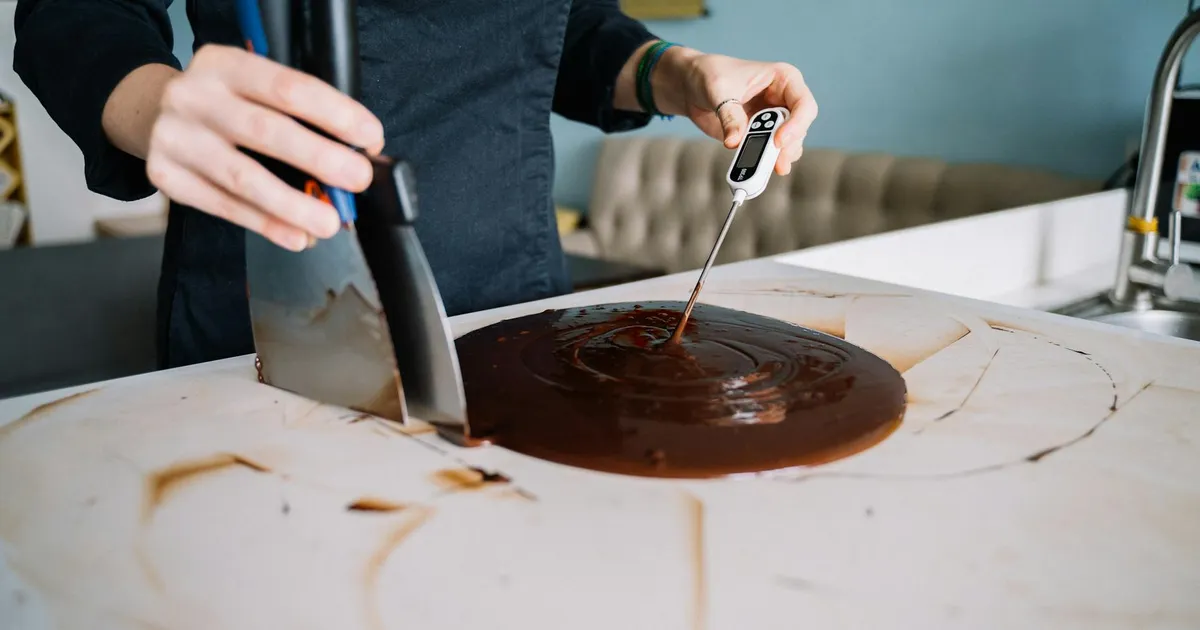
Photo by KitchenTemp via Pexels
Why Probe Placement Determines Everything
A food thermometer is only as useful as the technique of the person using it. You can have a perfectly calibrated, ±1°F accurate probe thermometer and still get a completely meaningless reading if the probe is not inserted into the correct location.
Consider chicken: the external surface of a roasted chicken breast can be 175°F while the center remains at 140°F. The center is the compliance measurement — that is where the most dangerous pathogens survive longest. If a cook checks the surface and records 175°F, they have documented a compliant reading for food that may not be safe.
This guide covers correct probe placement for every food type encountered in commercial kitchen operations, organized by food category and cooking method.
The Fundamental Principle: Find the Coldest Spot
For cooking verification, you are always looking for the coldest point in the food — the place where heat arrives last. That is the point that determines whether pathogens have been eliminated.
For cold holding verification, you are also looking for the warmest spot — the place where bacterial growth would first occur if the food is improperly temped.
Understanding this principle helps in every situation where specific guidance is not available.
Poultry
Whole Poultry (Chicken, Turkey, Duck)
Target temperature: 165°F (74°C) for 15 seconds
Probe placement:
- Insert the probe into the thickest part of the thigh, not touching bone
- The thigh is the coldest part of the bird during roasting (most insulated, furthest from heat)
- For stuffed poultry: also probe the stuffing center — stuffing must reach 165°F
Common mistake: Checking the breast first. The breast is closer to the surface and heats faster than the thigh. A breast reading of 165°F while the thigh is at 155°F means the bird is not safe to serve.
Chicken Breasts and Tenders
Probe placement: Insert horizontally from the side to reach the geometric center. For bone-in pieces, avoid the bone — bone conducts heat and will give a false-high reading immediately adjacent to it.
Poultry Parts (Wings, Thighs, Drumsticks)
Probe placement: Insert toward the thickest area, well away from bone, to reach the center of the meat mass.
Ground Meats
Burgers (Ground Beef, Turkey, Pork)
Target temperature: 155°F (68°C) for 17 seconds (FDA 2022 Food Code)
Probe placement: Burgers are thin — insert the probe horizontally through the side of the patty to reach the center. Inserting from the top risks hitting the grill surface before reaching the center.
Why ground meat requires a higher temp: Grinding distributes surface bacteria throughout the meat. Pathogens that would be at the surface of a whole steak are now in the interior.
Meatballs and Other Ground Products
Probe placement: Insert into the center of the largest meatball or product. For multiple small pieces, probe several to confirm consistency.

Whole Muscle Meats
Steaks (Beef, Pork, Lamb)
Target temperature: 145°F (63°C) for 15 seconds (FDA 2022 Food Code; note: some states require higher for pork)
Probe placement: Insert from the side to the geometric center of the cut. For thick cuts (≥2 inches), probe 3 locations across the surface.
Note on intact whole muscle beef: The FDA 2022 Food Code allows for consumer preference ordering (medium-rare steak) for intact whole muscle beef. Ground beef and mechanically tenderized meats do not have this exception.
Roasts (Prime Rib, Pork Loin, etc.)
Probe placement: Insert into the center of the thickest portion, away from bone and fat deposits (fat heats faster than muscle and will give a false-high reading). For large roasts, probe 3 locations.
Leave-in probe for cooking: For roasted meats, a leave-in probe can be used to monitor during cooking. Position it in the center of the thickest section at the start of cooking.
Pork Chops and Loin Cuts
Target: 145°F (63°C) for 15 seconds
Probe placement: Same as steaks — horizontal entry through side to geometric center, avoiding the bone.
Fish and Seafood
Fish Fillets and Whole Fish
Target temperature: 145°F (63°C) for 15 seconds
Probe placement: Insert horizontally into the thickest part of the fillet, from the side, to reach center. For whole fish, probe the thickest section behind the head.
Challenge: Fish is fragile and thin fillets can be difficult to probe without damage. For very thin fillets, probe from the thickest end at a shallow angle.
Shrimp, Crab, Lobster
Visual indicator + probe: Shellfish is typically judged by visual indicators (shrimp turns pink and curls; lobster turns red) combined with a flesh probe in the thickest section.
Scallops
Probe placement: Insert into the side of the largest scallop to reach center.
Casseroles, Lasagna, and Thick Dishes
Target: 165°F (74°C) for reheated items; cooking temperature varies by ingredient
Probe placement: Insert at multiple points (at least 3-4) across the surface of the pan, inserting to center depth each time. The corners and edges of baked dishes heat faster than the center.
Critical: Stir casseroles before probing if possible to distribute heat evenly. After stirring, probe the center mass.
Eggs and Egg Products
Shell Eggs (Immediate Service)
Target: 145°F (63°C) for 15 seconds, or cooked until white is set and yolk is thickened (visual)
Scrambled Eggs, Frittatas, Quiche
Probe placement: Insert into the center of the dish at the deepest point. For quiche, probe the center — this is the last point to set.
Egg casseroles and dishes cooked in pans
Probe placement: Multiple locations, including center at full depth.
Soups and Liquids
Target for reheating: 165°F (74°C) Target for hot holding: ≥135°F (57°C)
Probe placement: Stir the liquid before probing. Insert probe to the center depth of the pot or container. The surface of a liquid can be significantly warmer than the bulk of the soup — stirring ensures an even distribution before you measure.
Common mistake: Probing the surface of a soup on a steam table. Surface temperature is always higher due to direct heat and convection. Probe the center at full depth after stirring.
Cold-Held Foods
For verifying cold-holding compliance, the target is ≤41°F (5°C).
Probe placement for cold verification: Insert into the center of the product, away from the container edge (which is closest to the cold refrigerator wall and reads artificially low).
Deli items: Probe the center of the stack or block, not the surface.
Salads and mixed dishes: Probe multiple locations in the container, including the center of the deepest area.

Probe Sanitization Between Readings
Every time you probe one food item and move to another, the probe must be sanitized. This is a food safety requirement, not just hygiene:
- Wipe the probe with a clean paper towel
- Sanitize with an alcohol swab or sanitizing wipe
- Allow 10-15 seconds to air dry
- Proceed to the next food item
Failure to sanitize between probes creates a contamination pathway from raw proteins to cooked or ready-to-eat foods.
How KitchenTemp Helps
Every probe reading you take — regardless of the food type or technique used — should be logged with a timestamp and linked to the specific food item. KitchenTemp makes this logging fast and automatic, so the technique documentation matches the temperature documentation.
Train your team on correct probe technique, then use KitchenTemp to ensure every reading is recorded. Start your free trial at KitchenTemp.