Reducing Human Error in Food Safety: Systems That Catch Mistakes Before They Cause Harm
Human error causes most foodborne illness outbreaks. Learn the systems, checklists, and tools restaurant operators use to catch mistakes before they reach the customer.
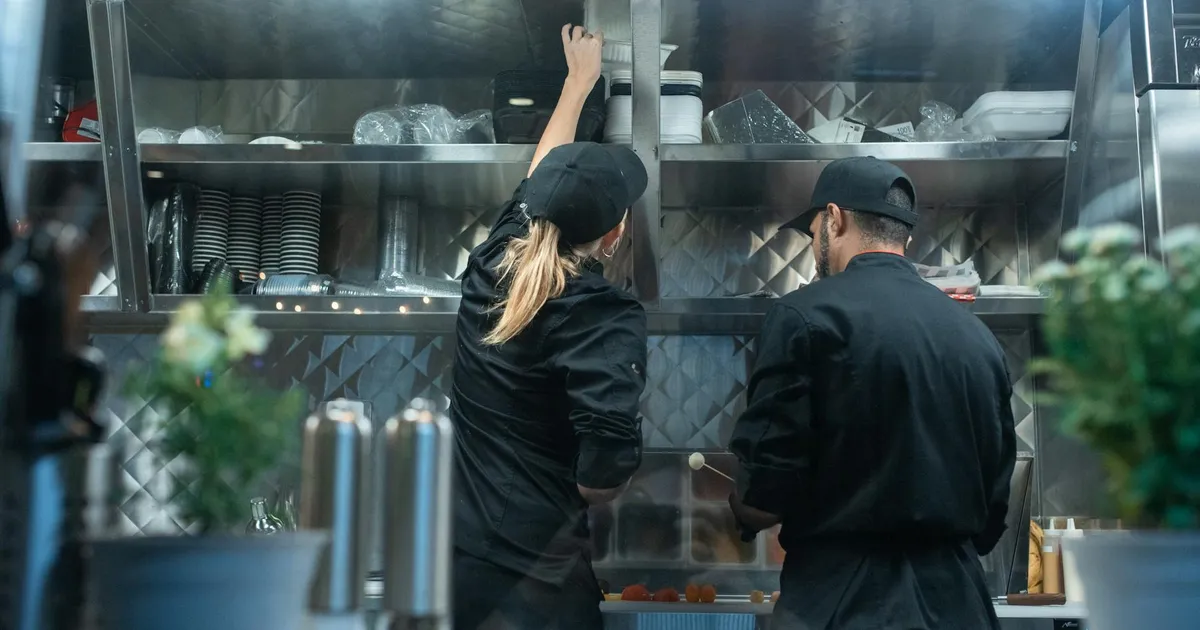
Photo by KitchenTemp via Pexels
The Human Error Problem in Food Safety
The FDA's top five risk factors for foodborne illness are: improper holding temperatures, inadequate cooking, contaminated equipment, food from unsafe sources, and poor personal hygiene. Four of the five are caused primarily by human error — not equipment failure, not natural disaster, and not systemic contamination from the supply chain.
This is the uncomfortable truth of food safety: the people who care most about their kitchen's reputation and the safety of their customers are also the primary source of the risk. Not because they are careless, but because they are human, and humans make mistakes — especially in high-pressure, high-volume environments.
The goal of a mature food safety system is not to eliminate people, but to design the environment and procedures so that human error is caught before it causes harm.
Understanding Why Errors Happen
Before designing error-reduction systems, it helps to understand the types of errors that occur.
Knowledge Gaps
The food handler does not know the correct procedure. They did not receive adequate training, or training was not reinforced. Result: temperatures checked incorrectly, foods stored in the wrong order, sanitizer prepared at the wrong concentration.
Solution: Better training + written reference materials at the point of need.
Attention Failures
The food handler knows the correct procedure but fails to execute it due to distraction, interruption, or fatigue. A cook in the middle of a dinner rush who checks a temperature and reads 158°F on the chicken, thinks "that's close enough," and moves on. Or logs the temperature from memory 20 minutes later — incorrectly.
Solution: Reduce task complexity + create uninterrupted moments for critical checks.
Memory Failures
The food handler forgets to complete a task. The opening temperature check that was skipped because a delivery arrived at the same time. The cooling log entry that was never made for the large batch of soup.
Solution: Checklists + reminders + accountability systems.
Situational Pressure
The food handler knows the correct action but takes a shortcut due to time pressure, workload, or peer influence. A line cook who knows food should reach 165°F but does not want to hold up the pass during a rush. A prep cook who skips the third step of the three-compartment sink when the sink is backed up.
Solution: Systems that make the right action easier than the shortcut + leadership that reinforces standards under pressure.
System 1: Checklists
Aviation, surgery, and nuclear power all rely heavily on checklists to reduce consequential errors. The research is clear: checklists reduce error rates in complex, high-stakes environments. Restaurants qualify.
Types of Checklists for Food Safety
Opening checklist: Equipment temperature verification, sanitizer preparation, food storage review, handwashing sink stocking. Completed before food preparation begins.
Closing checklist: Equipment temperature check, food storage for overnight, cleaning schedule completion, equipment shutdown.
Shift handoff checklist: Incoming shift confirms condition of key equipment and supplies from outgoing shift. Catches issues that would otherwise be discovered hours into service.
Temperature log schedule: Lists every piece of equipment, the required logging frequency, and who is responsible. Not a substitute for the actual log — a prompt that ensures the log gets done.
The key principle: the right person must own each checklist item. "Everyone is responsible" means no one is responsible. Assign specific tasks to specific roles.
Making Checklists Effective
- Keep them short (no more than 15 items per checklist)
- Use checkboxes, not open-ended questions
- Require a signature — accountability improves completion rates
- Review completed checklists weekly to identify patterns (the same item being skipped, or checked but not actually completed)
- Update checklists when procedures change — an outdated checklist is worse than no checklist
System 2: Visual Cues at the Point of Need
Training delivers knowledge once. Visual cues deliver it every day, exactly when it is needed.
Temperature Reference Posters
A laminated temperature chart at every cooking station — showing minimum internal temperatures for each protein on your menu — eliminates the need to remember. The cook does not have to recall whether ground beef needs 155°F or 165°F; they can glance at the chart. Reducing memory reliance reduces memory failures.
Color-Coded Systems
Color coding transfers knowledge into the physical environment. Color-coded cutting boards, date labels, thermometer cases, and storage containers reduce the cognitive load required to follow procedures correctly. When the blue board is always for seafood, the cook does not have to think — they reach for blue.
Labeled Storage

Every container in the walk-in should have a label with contents and date. Labels eliminate guessing, which eliminates one of the most common sources of foodborne illness: consuming food that was stored too long.
Walk-in coolers without labeling require food handlers to estimate or guess. Labeled coolers require only reading. The difference in error rate is significant.
System 3: Simplify the Critical Moments
The more steps required to complete a safety-critical task, the more opportunities for error. Simplifying the critical steps reduces the error rate.
Temperature Logging
Paper temperature logs require: finding the form, finding the right row, writing the correct equipment name, recording the time, writing the temperature, signing the entry, and filing the form correctly. Each step is an opportunity to make a mistake or skip the task entirely.
Digital logging reduces this to: open the app, select the equipment, enter the temperature, submit. Fewer steps, less opportunity for error, faster completion.
Corrective Actions
When a temperature reading is out of range, the correct response is immediate and specific: assess the food, take corrective action, document what was done. But if the food handler does not know the corrective action procedure — or if the procedure requires finding a manager, looking up a form, and writing a narrative explanation — the action may be delayed or skipped.
Build corrective actions into the logging system. When a reading is out of range, the system should prompt the food handler through the steps: "This reading is above the safe threshold. Has the food been above 41°F for more than 4 hours? Select: Yes / No / Unknown."
Guided corrective actions produce consistent outcomes and reduce the chance that a critical decision is made incorrectly under pressure.
System 4: Redundancy at Critical Points
Redundancy does not mean doing the same task twice. It means having a second mechanism that catches what the first misses.
Double-Check Protocols for High-Risk Processes
For the most consequential food safety moments — temperature of a large roast coming out of the oven, cooling temperature of a large batch of stock, receiving temperature of a seafood delivery — require a second check or verification.
This does not need to be a different person. It can be as simple as: log the initial temperature, then check again five minutes later to confirm the thermometer reading was accurate.
Manager Spot-Checks
Managers who periodically verify a sample of temperature logs against actual equipment readings create a feedback loop that catches systematic errors. If the hot-holding unit consistently reads 140°F in the log but actually runs at 138°F, the spot-check will find it. Without spot-checks, the discrepancy may persist indefinitely.
Automated Alerts
Continuous monitoring with automated alerts is the ultimate redundancy system for temperature control. If a walk-in cooler warms to 45°F at 2 a.m., an alert fires and the manager can respond before the morning opening shift — before food is compromised.
Automated alerts do not depend on human memory, attention, or shift timing. They catch failures in the gaps.
System 5: Learning from Near-Misses
Errors that cause harm are the worst way to learn. Near-misses — situations where something almost went wrong but was caught in time — are the best opportunity to improve the system.
A cooling batch of soup that was found at 60°F at the four-hour mark (instead of the required 70°F) is a near-miss. The soup was caught in time, the problem was corrected, and no food safety incident resulted. But the near-miss reveals a gap: the cooling method used was not effective for that volume of soup.
Encourage near-miss reporting by removing punishment from the equation. A team that reports near-misses proactively is a team with good situational awareness. Treat those reports as valuable data, not as admissions of failure.
Review near-miss reports and corrective actions monthly. Ask: is there a pattern? Is the same equipment failing repeatedly? Is the same procedure being skipped consistently? Pattern recognition at the system level is how individual near-misses become permanent improvements.
How KitchenTemp Helps
KitchenTemp is designed specifically to reduce the friction and opportunity for error in temperature logging and corrective action documentation.
The three-tap logging interface eliminates the multi-step paper process. Guided corrective action prompts ensure that food handlers take the right action even when they are uncertain. Automated alerts catch temperature failures in real time. Manager dashboards show log completion rates, making it easy to spot gaps before they become patterns.
Human error is irreducible. But with the right systems, errors are caught before they cause harm.
Start your free trial at KitchenTemp and build a food safety operation that catches mistakes rather than creating them.