SOP for Temperature Logging: Step-by-Step Procedures for Every Kitchen Station
A complete standard operating procedure for restaurant temperature logging: cold holding, hot holding, cooking, cooling, and receiving — with downloadable log templates.
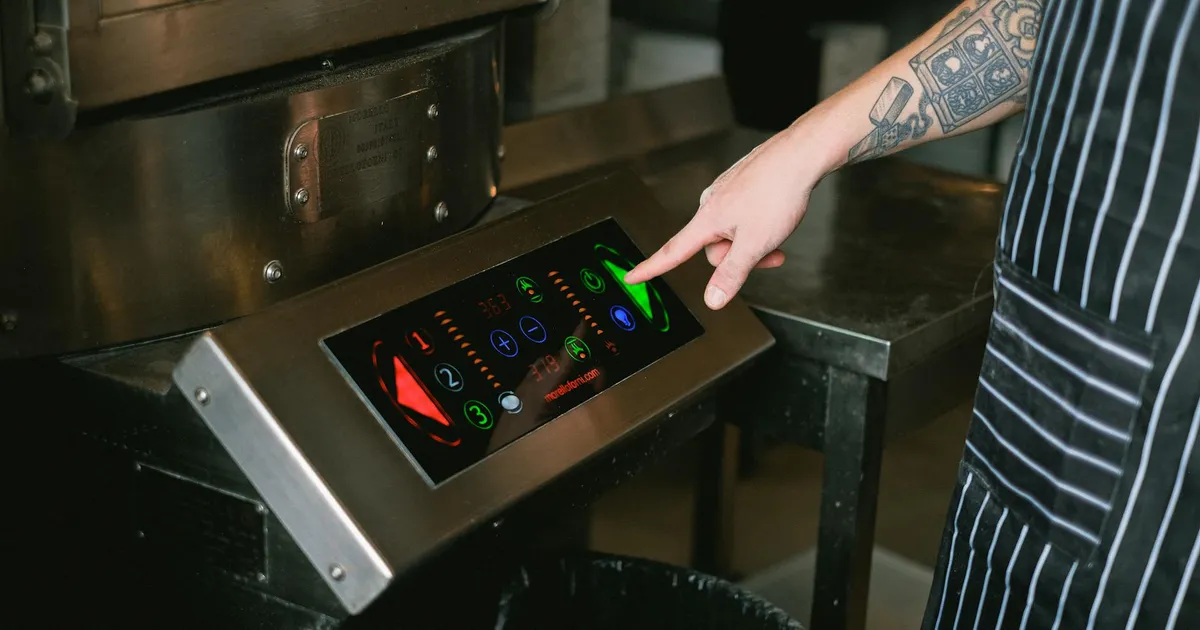
Photo by KitchenTemp via Pexels
Why Standard Operating Procedures for Temperature Logging?
Temperature is the most critical measurable variable in food safety. The difference between 40°F and 50°F in a walk-in cooler is the difference between safe food and a bacterial growth problem. The difference between 155°F and 165°F in a cooked chicken breast is the difference between destroying Salmonella and leaving it alive.
But temperature control only works when it is done consistently, correctly, and documented. A well-intentioned kitchen staff that takes temperatures inconsistently, uses uncalibrated thermometers, or fills in logs from memory creates an illusion of food safety without the reality.
Standard operating procedures for temperature logging standardize the process: the right equipment, the right technique, the right timing, the right documentation. This guide provides SOPs for every major temperature monitoring point in a restaurant kitchen.
Equipment Requirements Before You Start
Every temperature logging procedure requires properly maintained equipment. No SOP works without it.
Thermometer Calibration Verification (Pre-Shift)
Before every shift, the opening manager should confirm that thermometers assigned to CCP monitoring are calibrated:
- Fill a glass with crushed ice, add water to create slurry
- Insert probe into the center of the slurry
- Wait 30 seconds for stabilization
- Reading should be 32°F ± 2°F
- If outside range: remove from service and replace with calibrated backup
- Mark the thermometer with date of verification (small piece of tape or label on handle)
Thermometer assignment: Assign specific thermometers to specific stations and label them. "Cook Line #1," "Walk-in #1," "Hot Line #1." This ensures calibration records link to the instrument used.
Sanitizing Thermometers Between Uses
Between temperature checks on different products:
- Rinse probe in clean water
- Wipe with an alcohol swab or dip in sanitizer solution (200 ppm quaternary ammonium or 100 ppm chlorine)
- Allow to air dry before next use (or dry with clean paper towel)
Never check raw chicken temperatures and then immediately probe a cooked product without sanitizing the thermometer.
SOP 1: Cold Holding Temperature Monitoring
Purpose: Verify that all potentially hazardous foods stored under refrigeration are maintained at or below 41°F, preventing bacterial growth.
Frequency: Minimum 3 times per shift — at opening, mid-shift (4 hours after opening check), and closing. High-risk periods (large deliveries, hot weather, equipment maintenance) warrant hourly checks.
Equipment: Calibrated digital probe thermometer; Cold Holding Log form (or digital logging device)
Procedure
Step 1: Opening Check
- Note current time on the log form
- Open the first refrigeration unit and allow 30 seconds for air equilibration
- Select food product from the warmest zone (near the door, top shelf, not in the back corner near the evaporator coil)
- Insert calibrated probe into the center of the product
- Wait for reading to stabilize (2–3 seconds for digital)
- Record the temperature on the log: date, time, unit ID, reading, and your initials
- Compare to critical limit (≤41°F)
- If PASS: proceed to next unit. If FAIL: initiate corrective action immediately
- Repeat for each refrigeration unit
Step 2: Mid-Shift Check
- Perform same procedure 4–5 hours after opening check
- Pay special attention to units that were opened frequently during the morning period
- Note any unusual patterns (reading has risen compared to opening check — investigate why)
Step 3: Closing Check
- Perform same procedure at end of service
- Check that all products are covered and properly stored before closing
- Note any products requiring attention (high date labels, unusual packaging, etc.)
Critical Limit: ≤41°F
Corrective Action if Critical Limit Exceeded:
- Note the time the exceedance was recorded
- Check previous log entries to estimate how long the temperature has been elevated
- Probe multiple products in the unit to determine extent of the problem
- If elevated <2 hours and temperature is ≤45°F: move products to functioning unit; schedule service call; monitor
- If elevated 2–4 hours and temperature is ≤45°F: evaluate product safety with manager; move to functioning unit
- If elevated >4 hours OR temperature >45°F: discard all potentially hazardous food in the unit; document disposition
Documentation: Cold Holding Log, Corrective Action Report (if applicable)
SOP 2: Hot Holding Temperature Monitoring
Purpose: Verify that all hot-held foods maintain a temperature of ≥135°F during service, preventing bacterial growth in cooked foods awaiting service.
Frequency: Every 2 hours during active service periods; at the start of service
Equipment: Calibrated digital probe thermometer; Hot Holding Log form
Procedure
Before Service:
- Verify that all hot holding equipment (steam table, warming drawers, heated display cases) is at proper operating temperature before loading food
- Do not load cold food into hot holding equipment — the equipment is a holder, not a heater
- Once food is loaded, take initial temperature check and record
During Service (Every 2 Hours):
- Note current time on log
- Stir or rotate each hot holding pan before probing (to distribute temperature evenly)
- Insert probe into center/thickest portion of food, away from pan edges
- Wait for stabilization
- Record temperature, time, item, and initials
- If any reading is below 135°F: initiate corrective action immediately
Critical Limit: ≥135°F
Corrective Action if Critical Limit Not Met:
- Remove the item from service
- Determine how long it has been below 135°F (last passing check was 2 hours ago = maximum 2 hours)
- If below 135°F for <2 hours: reheat to 165°F on stovetop, oven, or other heat source (never use hot holding equipment for reheating), then return to service
- If below 135°F for ≥2 hours: discard the product; document quantity and reason
- Adjust hot holding equipment temperature settings; verify fix with a follow-up check in 30 minutes
Documentation: Hot Holding Log, Corrective Action Report if applicable
SOP 3: Cooking Temperature Verification
Purpose: Confirm that cooked animal foods reach required internal temperatures to destroy pathogens including Salmonella, Campylobacter, and E. coli.
Frequency: Every batch; every individual protein portion for small-volume cooking
Equipment: Calibrated digital thin-tip probe thermometer
Procedure
- Allow cooking to appear complete before measuring (visual indicators: juices run clear, internal texture firmed)
- Remove product from direct heat source OR while still on heat at completion of cook time
- For poultry: insert probe into the thickest part of the breast or thigh, away from bone
- For burgers/patties: insert probe through the side of the patty to reach the geometric center
- For roasts/whole proteins: insert into the center of the thickest part
- Wait for reading to stabilize
- Check reading against required critical limit for that product type
- Record: time, product, lot/batch identifier, reading, required temp, pass/fail, initials
Cooking Critical Limits:
| Product | Required Internal Temp | |---|---| | All poultry | 165°F | | Ground beef, pork, lamb | 155°F | | Whole muscle beef, pork | 145°F | | Fish and shellfish | 145°F | | Shell eggs (immediate service) | 145°F | | Stuffed products | 165°F |
Corrective Action:
- Return product to heat immediately
- Do not plate, expedite, or serve until critical limit is confirmed
- Re-probe after 1–2 additional minutes of cooking
- Document the initial reading, corrective action taken, and final passing reading
- If product cannot reach temperature without overcooking to unacceptable quality: consult with management about product modification
Documentation: Cook Temperature Log
SOP 4: Cooling Procedure and Monitoring
Purpose: Ensure that cooked foods cool through the temperature danger zone quickly enough to prevent growth of C. perfringens, B. cereus, and other spore-forming pathogens that survive cooking.
Frequency: At the start of cooling (record starting temp and time), at 2 hours (required checkpoint), at completion of cooling
Equipment: Calibrated probe thermometer, ice baths, shallow cooling pans, blast chiller (if available); Cooling Log form
Procedure
Step 1: Prepare for cooling
- Divide large batches into small, shallow portions (2-inch depth maximum for soups, sauces, rice, and stews)
- Label each container with: contents, start temperature, start time, and your initials
- Record on Cooling Log: item, quantity, start temp, start time
Step 2: Apply cooling method Choose the appropriate method for the product and volume:
- Ice bath: Place shallow pans in a larger container filled with ice and water; stir contents every 15–20 minutes
- Blast chiller: Use manufacturer settings for blast-chill cycle
- Walk-in cooler: Acceptable ONLY for small quantities in shallow pans (<2 inches deep); not acceptable for large pots
Step 3: 2-Hour Checkpoint (MANDATORY)
- At exactly 2 hours from cooling start time, insert probe into center of cooling product
- Temperature MUST be 70°F or below at this checkpoint
- Record: time, reading, initials
- If ≤70°F: proceed — move to walk-in cooler if not already there
- If >70°F: CORRECTIVE ACTION REQUIRED — move to smaller pans, add more ice, or discard if 2-hour mark has been exceeded without reaching 70°F
Step 4: Final Check (6-Hour Mark)
- At 6 hours from start of cooling, probe final temperature
- Must be ≤41°F
- Record final temp, time, initials, and final disposition
- If ≤41°F: product is safe for storage; apply date label for storage
- If >41°F: DISCARD; document quantity and reason
Documentation: Cooling Log (mandatory), Corrective Action Report if applicable
SOP 5: Receiving Temperature Monitoring
Purpose: Prevent the introduction of temperature-abused or contaminated food products into the kitchen.
Frequency: Every delivery
Equipment: Calibrated probe thermometer; Receiving Log form
Procedure
- Before accepting delivery: review invoice and check that supplier is an approved vendor
- Inspect packaging for damage, evidence of pest activity, and signs of temperature abuse (ice crystals, water pooling in bottom of boxes, soft texture in frozen items)
- Using calibrated probe thermometer, take temperature of refrigerated items:
- For packaged items: insert probe between packages or fold package around probe
- For bulk items: insert directly into the product
- Take minimum 2 temperature readings per delivery
- Record on Receiving Log: date, time, supplier, product, temperature reading, and decision (accepted/rejected)
- Compare to critical limit (≤41°F for refrigerated; frozen = solid, no thaw evidence)
- If product fails critical limit: do not accept the product; document rejection on receiving log; contact supplier immediately
Critical Limit: Refrigerated foods ≤41°F; frozen foods must be frozen solid with no evidence of thawing and refreezing
Documentation: Receiving Log
SOP 6: Reheating Temperature Monitoring
Purpose: Ensure that previously cooked and cooled foods are reheated to a temperature sufficient to destroy any pathogens introduced during cooling and storage.
Frequency: Every batch
Equipment: Calibrated probe thermometer; Reheat Temperature Log
Procedure
- Note start time of reheating process on log
- Reheat ONLY using direct heat (stovetop, oven, steamer, microwave) — NEVER use hot holding equipment for reheating
- For stovetop/oven: bring food to vigorous steam/boil internally
- At completion of reheating: insert calibrated probe into center of thickest part
- Required reading: ≥165°F
- Record: time, product, temperature reading, pass/fail, initials
- If 165°F is met: transfer immediately to hot holding equipment at ≥135°F
- Total reheating time must not exceed 2 hours from start to reaching 165°F
Critical Limit: ≥165°F within 2 hours
Documentation: Reheat Temperature Log
How KitchenTemp Helps
These SOPs create a strong foundation — but executing them consistently across every shift, every day, requires systems that remind and record without relying on memory.
KitchenTemp provides:
- Scheduled prompts for each SOP at the right time and station
- Mobile-friendly logging so readings can be entered from anywhere in the kitchen
- Automatic critical limit comparison with instant corrective action alerts
- Complete log records with timestamps that satisfy health department requirements
Start your free trial at KitchenTemp and turn these SOPs from policy into daily practice.