Types of Food Thermometers for Commercial Kitchens: A Practical Guide
Bimetallic, thermocouple, infrared, or data logger? This guide covers every food thermometer type, where each works, and what your kitchen actually needs.
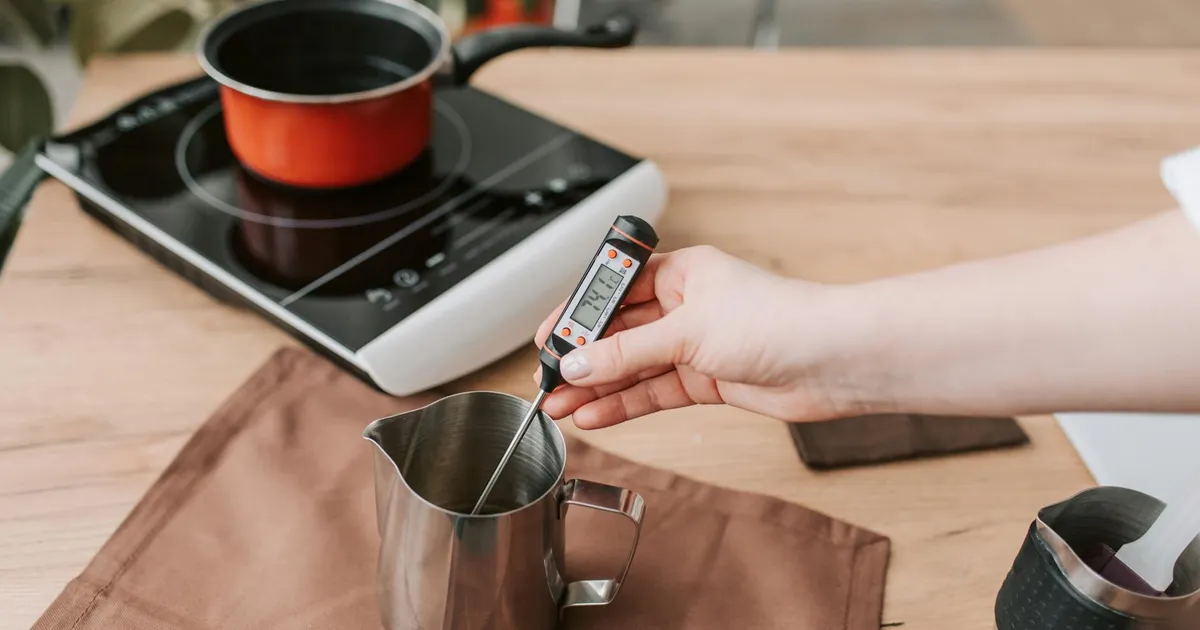
Photo by KitchenTemp via Pexels
Why Thermometer Selection Matters in a Commercial Kitchen
Not all thermometers are created equal, and using the wrong type for a given application produces inaccurate readings — which means inaccurate compliance logs and, more importantly, potential food safety failures. A thick bimetallic probe is useless for a thin fish fillet. An infrared surface scanner cannot verify the internal temperature of a burger patty. An oven probe cannot go into an ice bath.
Every commercial kitchen needs multiple thermometer types to cover its full range of compliance needs. Understanding what each type does — and does not do — helps you equip your kitchen correctly and train your staff to use the right tool for each check.
Bimetallic Stem Thermometer
How it works: Two metals bonded together expand at different rates when heated, causing the probe to flex and move a dial indicator.
Key specs:
- Response time: 15–60 seconds
- Accuracy: ±2°F (±1°C) when properly calibrated
- Sensing zone: the 2–3 inches at the bottom of the probe (not just the tip)
- Temperature range: typically -40°F to 160°F (-40°C to 71°C) for food service models
Best for:
- Thick proteins (roasts, whole poultry, large cuts)
- Soups and stocks
- Walk-in cooler ambient temperature checks
- Budget-conscious operations as a backup thermometer
Limitations:
- Too slow for line use during service
- Sensing zone requirement makes it impractical for thin products
- Calibration nut can shift back out of adjustment with regular use
- Cannot accurately probe items thinner than 3 inches
Calibration: Adjustable via calibration nut on the dial head. Use ice point or boiling point method.
Digital Instant-Read Thermometer
How it works: A thermistor (resistive temperature sensor) at the probe tip changes resistance with temperature; the digital circuit converts this to a temperature reading.
Key specs:
- Response time: 5–15 seconds
- Accuracy: ±1–2°F (±0.5–1°C)
- Sensing zone: at the tip (approximately 0.5 inches)
- Temperature range: typically -40°F to 450°F (-40°C to 232°C)
Best for:
- Line cooking temperature checks
- Receiving inspections
- Most cooking temperature applications
- General-purpose use
Limitations:
- Battery-dependent
- Lower durability than bimetallic when dropped
- Some models cannot be field-calibrated
Calibration: Many models have a reset button for field calibration. Check the manufacturer's documentation.
The workhorse thermometer: A good quality digital instant-read thermometer (Thermapen, ThermoWorks, or equivalent) is the most important thermometer in a commercial kitchen. Every kitchen needs at least two (to ensure one is always available when the other is being calibrated or charging).
Thermocouple Thermometer
How it works: Two dissimilar metals joined at the probe tip generate a small voltage proportional to temperature, measured by the meter.
Key specs:
- Response time: 2–5 seconds
- Accuracy: ±0.5–1°F (±0.3–0.5°C)
- Sensing zone: at the junction at the very tip
- Temperature range: very wide, often -200°F to 2000°F (-129°C to 1093°C)
Best for:
- HACCP-critical applications where highest accuracy is required
- Operations with regulatory scrutiny
- Thin products requiring precise readings
- Multi-probe simultaneous monitoring
Limitations:
- High cost
- Often require factory calibration
- Multiple interchangeable probe types needed for different applications
Probe types available:
- Standard penetration probe (general use)
- Thin penetration probe (thin products, small portions)
- Surface probe (flat surfaces, griddles)
- Air/immersion probe (ambient temperature, liquids)
Infrared (IR) Thermometer
How it works: Measures the infrared radiation emitted by a surface to calculate surface temperature without contact.
Key specs:
- Response time: Instantaneous
- Accuracy: ±2–4°F (±1–2°C)
- Measures: Surface temperature only
- Temperature range: typically -40°F to 750°F (-40°C to 400°C)
Best for:
- Receiving checks (verifying surface temperature of deliveries quickly)
- Equipment surface temperature checks (grill temperature, griddle temperature)
- Rapid screening of large volumes of product
- Walk-in cooler wall and shelf temperature checks
Critical limitation — IR thermometers cannot verify internal food temperature. An IR thermometer reads only the surface. A burger patty at 120°F (49°C) internally may have a seared surface that reads 350°F (177°C). IR thermometers are useful screening tools but cannot replace probe thermometers for compliance temperature checks on cooked food.
Compliance note: IR thermometer readings are not acceptable as the primary temperature verification for cooking, reheating, or holding compliance. They are supplementary tools only.
Oven-Safe / Leave-In Probe Thermometers
How it works: A probe connected by a heat-resistant cable to an external display unit, designed to remain in food throughout cooking.
Best for:
- Large roasts where you want to monitor internal temperature continuously without opening the oven
- Sous vide applications
- Monitoring cooling in a blast chiller
Limitations:
- Typically single-point measurement
- Cannot be used as a mobile compliance instrument
- Cable can become a contamination vector if not cleaned properly
Wireless and Bluetooth Probe Thermometers
How it works: Probe with a wireless transmitter that sends temperature data to a receiver or smartphone app.
Best for:
- Monitoring multiple items simultaneously
- Remote monitoring of smokers, ovens, or walk-ins
- Proactive alerts when items reach target temperature
Limitations:
- Battery and connectivity dependent
- Generally not designed for institutional compliance use
- Accuracy varies significantly by brand
Data Loggers
How it works: An electronic sensor that records temperature automatically at set intervals, storing a continuous data history.
| Feature | Details | |---------|---------| | Logging interval | Configurable, typically 1–60 minutes | | Data storage | Days to months of readings | | Accuracy | ±0.5–2°F depending on model | | Connectivity | USB, Wi-Fi, or Bluetooth for data download |
Best for:
- Walk-in cooler and freezer continuous monitoring
- Regulatory compliance in jurisdictions requiring continuous records
- HACCP documentation for cold chain
Critical note: Data loggers used for compliance must be validated and calibrated on a regular schedule, typically every 6–12 months per manufacturer specifications or your HACCP plan.
Thermometer Selection Guide for Common Kitchen Applications
| Application | Recommended Thermometer Type | |-------------|------------------------------| | Cooking whole poultry | Digital instant-read or thermocouple | | Thin fish fillet | Thermocouple with thin probe | | Ground beef patty | Digital instant-read (horizontal insertion) | | Soup / stock temperature | Digital instant-read or bimetallic | | Walk-in cooler ambient | Bimetallic, data logger, or dedicated wall unit | | Receiving inspection | IR (screening) + digital instant-read (verification) | | Grill/griddle surface | IR thermometer | | Hot holding check | Digital instant-read | | Cold holding check | Digital instant-read |

Minimum Thermometer Kit for a Commercial Kitchen
Every restaurant should have at minimum:
- Two digital instant-read thermometers — one as primary, one as backup
- One bimetallic thermometer — for walk-in checks and backup
- One IR thermometer — for receiving and equipment checks
- Calibration equipment — a container and crushed ice source for ice point method
Larger operations with walk-in units should add: 5. Data loggers in each walk-in for continuous temperature monitoring
How KitchenTemp Helps
KitchenTemp works with any thermometer type your kitchen uses — staff enter readings manually from their assigned thermometer after each check. The system tracks which thermometer ID was used for each reading (supporting your calibration traceability) and flags any out-of-range reading regardless of the source. If your walk-in uses a data logger, KitchenTemp can integrate that continuous feed into your compliance dashboard. Get started at KitchenTemp and connect all your temperature data in one place.